
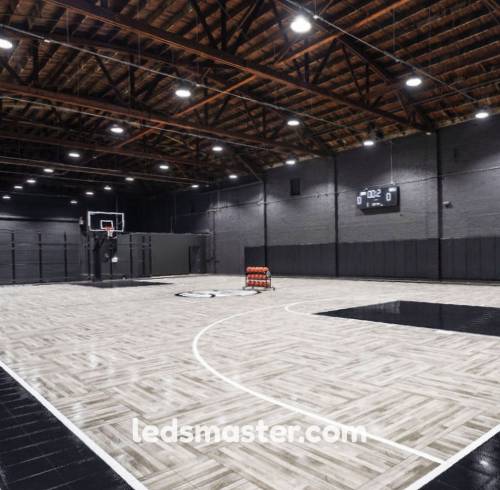
 When it comes to basketball, brightness isn’t just about making the court visible—it’s about giving players confidence to track the ball, judge distances, and react fast. Brightness is usually measured in lux (lx) or foot-candles (fc). For indoor recreational courts, around 300–500 lux is usually enough. That’s enough light to see clearly without being harsh or blinding. For gyms hosting tournaments or games that are being filmed, the number jumps significantly—professional or broadcast courts often aim for 1000–1500 lux, so cameras can capture crisp footage without shadows messing with the picture.
Outdoor courts are a bit trickier because natural light mixes with artificial lighting. Evening games usually need 200–400 lux, depending on how competitive the players are. Casual pick-up games might get by with the lower end, but serious amateur leagues benefit from higher brightness, around 350–400 lux. The height of the fixtures also affects brightness: taller poles allow light to spread more evenly but need higher wattage to maintain the same lux at the playing surface.
Being bright isn’t enough if the light isn’t evenly spread. Imagine one corner of the court glowing while the opposite corner looks like twilight—players will misjudge passes, struggle with layups, and even risk twisting an ankle. Uniformity measures how balanced the light is across the court and is usually expressed as a ratio of the minimum to maximum illuminance. A ratio of 0.7 or higher is ideal, meaning the dimmest spot should be at least 70% as bright as the brightest spot.
For basketball, uniformity isn’t just about safety—it affects performance. Courts with uneven lighting make it harder to track the ball in fast breaks or when shooting from long range. For example, if a half-court shot is taken from a dimly lit corner, players’ depth perception can be off by a noticeable margin. Proper lighting design considers the size of the court (typically 28 by 15 meters for standard indoor courts), fixture placement, beam angles, and the reflectivity of walls and flooring to reduce hot spots or dark patches.
Brightness is one thing, but color temperature, measured in Kelvin (K), plays a huge role in how natural and comfortable a court feels. Indoor courts typically use neutral white lights around 4000–5000K, which balances clarity and comfort. This temperature helps players pick out the orange basketball against a wooden or synthetic floor without squinting or straining their eyes.
Outdoor courts often lean a bit cooler, around 5000–6000K, which mimics daylight. Cooler light improves visibility in late afternoon or evening games and keeps the court looking crisp even under fading sunlight. The wrong color temperature can make the ball harder to see, distort colors, and even affect players’ reaction times during fast passes or jump shots. For broadcast games, slightly higher color temperatures also reduce flicker on camera, making the footage look smoother.
Glare is the sneaky problem that ruins a good game faster than you realize. Players are constantly looking up—tracking the ball on rebounds, defending high passes, or shooting from long range. If the fixtures are aimed poorly or don’t have the right shielding, direct glare can temporarily blind players, causing missed shots or awkward landings.
Light direction and fixture placement are key. Lights are usually mounted around 7–12 meters high indoors and 8–15 meters outdoors. Fixtures often have tilted lenses or diffusers to spread light across the court without blasting the players’ eyes. Some advanced setups even use asymmetric beam angles, focusing more light on areas like the three-point line or the basket, while keeping less critical areas slightly dimmer to reduce energy use. Proper shielding also helps prevent spill light, which is wasted light that escapes outside the court—this is especially important for outdoor courts in residential areas to avoid complaints.
Beyond basic brightness and direction, there are other factors that can make or break court lighting. Flicker rate is one—LEDs with poor drivers can flicker subtly, which might not be obvious to the eye but can affect shooting rhythm or even cause discomfort over time. Professional courts often aim for flicker rates below 5%, keeping the light steady for both players and cameras.
Another consideration is contrast ratio—the difference between bright and dark areas on the court. Too much contrast makes the ball disappear in shadows or appear washed out in bright spots. Ideally, indoor courts keep contrast ratios under 3:1, so players can see consistently across the whole surface.
Finally, control systems are becoming a game-changer. Dimmable LEDs and smart lighting controls allow gyms to adjust brightness for practice, tournaments, or televised games. Even outdoor courts can benefit from motion sensors or timers, cutting energy use by 30–50% when the court isn’t in use.
With the right combination of lux, uniformity, color temperature, glare control, and smart features, a court isn’t just visible—it becomes easier, safer, and more fun to play on. Players notice the difference immediately, whether it’s smoother passes, fewer eye strains, or better depth perception on long-range shots. Good lighting turns a standard court into a more professional-feeling space without changing the size of the floor or the hoops.
| Parameter | Indoor Recreational Courts | Indoor Professional/Broadcast Courts | Outdoor Recreational Courts | Outdoor Competitive Courts |
|---|---|---|---|---|
| Recommended Brightness (Lux) | 300–500 lux | 1000–1500 lux | 200–300 lux | 350–400 lux |
| Uniformity Ratio (Min/Max) | ≥ 0.7 | ≥ 0.7 | ≥ 0.7 | ≥ 0.7 |
| Color Temperature (Kelvin) | 4000–5000K | 4500–5000K | 5000–6000K | 5000–6000K |
| Fixture Mounting Height | 7–12 m | 7–12 m | 8–15 m | 8–15 m |
| Contrast Ratio | ≤ 3:1 | ≤ 3:1 | ≤ 3:1 | ≤ 3:1 |
| Flicker Rate | ≤ 5% | ≤ 5% | ≤ 5% | ≤ 5% |
| Energy Control Options | Dimmable LEDs / Timers | Dimmable LEDs / Smart Controls | Motion Sensors / Timers | Motion Sensors / Smart Controls |
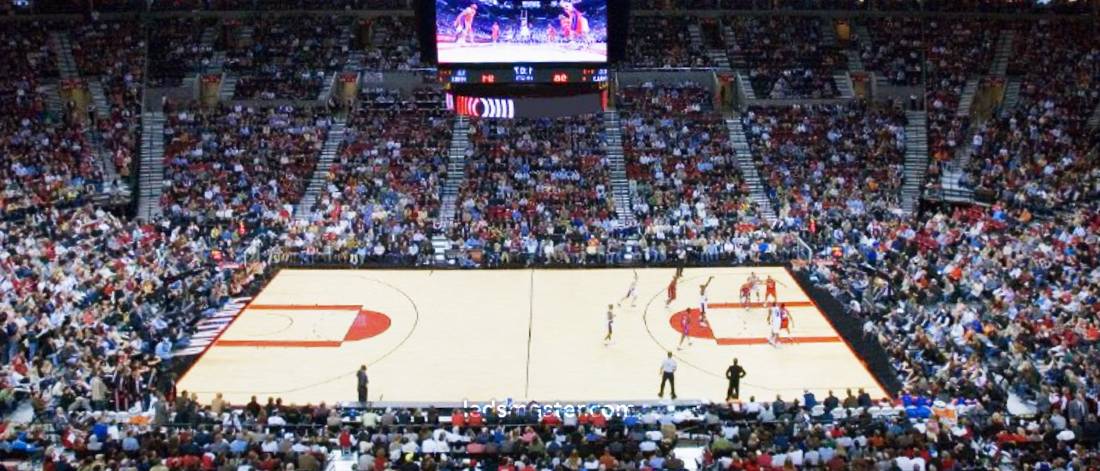
When people start thinking about basketball court lighting, most of the attention usually goes to the price tag on the lights themselves. But honestly, that’s only part of the story. The total cost of lighting a basketball court covers not just the fixtures, but also installation, electricity, and ongoing upkeep. Let’s break it down so it all makes sense.
For a mid-sized indoor basketball court—say, a standard high school gym with seating for a few hundred spectators—an LED lighting system can cost anywhere from $15,000 to $50,000. That number depends on several things:
For outdoor courts, the fixtures themselves are often cheaper because there’s no ceiling structure to mount to. But then you have pole installation, trenching for wiring, and weatherproofing, which can push the total higher. A well-lit outdoor court with 6–8 poles can easily run $20,000–$40,000 once everything is installed.
And if we’re talking about broadcast-quality indoor arenas—the kind you see on TV—the costs climb fast. Some professional-level lighting systems can top $100,000 or even $150,000, especially if they include advanced controls, zero-flicker LEDs for slow-motion cameras, and dramatic effects for player introductions.
Once the lights are up, the next question is: how much do they cost to run?
LEDs have changed the game here. They use up to 60–70% less energy compared to old-school metal halide or fluorescent lamps. For example, a modern 300W LED fixture can replace a 1000W metal halide lamp and produce even better lighting quality.
Let’s say you have a 20-fixture LED setup, each drawing about 300 watts. That’s 6,000 watts total. If the court runs 3 hours a day, all year long, that’s about 6,570 kWh annually. At an electricity rate of $0.15 per kWh, you’re looking at roughly $985 per year. Compare that to metal halide lights consuming 3 times as much power, and you can see why so many gyms and schools are switching.
For bigger arenas using 40–50 fixtures, energy costs might land closer to $3,000–$5,000 annually, but it still beats older systems by a wide margin.
Even the best lights don’t last forever. LEDs have an impressive lifespan of 50,000–100,000 hours, which means if you run them 3 hours a day, they can last 20–30 years before needing full replacement.
By comparison, metal halide lamps usually last only 15,000–20,000 hours, so they might need replacement every 5–7 years under the same conditions. Plus, metal halide bulbs dim over time, so courts often replace them early because the lighting quality drops below recommended lux levels.
Maintenance costs aren’t just about bulbs, either. You’ll need to clean fixtures (dust can cut light output by 10–20%), check wiring, tighten mounts, and occasionally re-aim lights to keep uniformity consistent. Budgeting $500–$2,000 per year covers routine maintenance for most single-court gyms.
High-end arenas with complex control systems or dozens of fixtures might see annual upkeep costs climb to $5,000 or more, especially if they include warranty plans or service contracts.
When you add it all up, LEDs often pay for themselves in the long run. For instance, a school spending $40,000 upfront on LEDs might save $2,000–$3,000 annually on energy and maintenance compared to older systems. Over 15 years, that’s $30,000–$45,000 in savings—basically covering the initial investment.
This is why many facilities look at lifecycle costs, not just sticker price. The cheaper option upfront often costs more over 10–20 years because of higher electricity bills and frequent replacements.
| Types of Cost | Indoor Recreational Courts | Outdoor Recreational Courts | Professional / Broadcast Arenas |
|---|---|---|---|
| Initial Investment | $15,000–$50,000 (18–24 fixtures) | $20,000–$40,000 (6–8 poles) | $100,000–$150,000+ |
| Energy Use (Annual) | ~$985 (20 LEDs @ 300W, 3 hrs/day) | ~$1,200–$1,800 (varies by setup) | $3,000–$5,000 (40–50 LEDs @ 300W+) |
| Energy Savings vs Metal Halide | 60–70% reduction | 60–70% reduction | 60–70% reduction |
| Fixture Lifespan | 50,000–100,000 hrs (20–30 yrs) | 50,000–100,000 hrs (20–30 yrs) | 50,000–100,000 hrs (20–30 yrs) |
| Maintenance Costs (Annual) | $500–$2,000 | $500–$2,000 | $3,000–$5,000+ |
| Payback Period | 3–5 years | 3–5 years | 5–7 years |
| 15-Year Savings | $30,000–$45,000 | $25,000–$40,000 | $50,000+ |
Lighting a basketball court isn’t a one-size-fits-all thing. Indoor gyms and outdoor courts have completely different challenges, and the lighting design has to adapt to both the environment and how the court is used. What works perfectly inside a school gym might fail miserably on a community park court when the sun goes down.
Indoor basketball courts usually have polished hardwood floors, painted walls, and sometimes even bright bleachers or banners that reflect light in unexpected ways. These reflections can help brighten the court if used correctly, but they can also create hot spots where the light bounces back too harshly.
To keep the lighting consistent across the full playing area, designers often mount fixtures at heights between 7–12 meters above the floor. At this height, you can achieve uniformity ratios of 0.7 or higher, meaning the dimmest parts of the court stay at least 70% as bright as the brightest. This matters for things like three-point shots—a player shooting from the corner shouldn’t feel like they’re throwing the ball into a dim cave compared to someone shooting at the top of the key.
Indoor gyms also need to consider glare control, especially since players look upward frequently for rebounds or alley-oops. That’s why many gyms now use LED fixtures with diffusers or anti-glare optics to spread the light evenly without blinding players mid-game.
Outdoor courts bring a whole different set of problems. For one, sunlight plays a huge role. Evening games often start with natural daylight and end under artificial lighting, so fixtures have to be bright enough—usually 200–400 lux for recreational courts—to take over as the sun sets without creating sudden contrasts.
Then there’s the weather. Outdoor fixtures face rain, dust, wind, and temperature swings from below freezing in winter to over 100°F in summer in some regions. That’s why lights need IP65-rated or higher housings, which means they’re dust-tight and protected against water jets. Without proper sealing, moisture can seep in, ruining the electronics and causing failures that are expensive to fix.
Mounting poles also need to be taller outdoors—usually 8–15 meters high—so the light spreads across the full court without creating dark corners. Taller poles reduce shadows but require higher-wattage LEDs to maintain the same brightness at the court surface.
Not long ago, outdoor courts relied on metal halide lamps, which had long warm-up times and faded unevenly over time. Now, LED technology delivers instant-on lighting, better uniformity, and 60–70% energy savings, whether indoors or outdoors.
For example, a well-designed LED system on a public outdoor court might use 6–8 fixtures at 300–500W each, delivering even coverage at about 250–350 lux. The same court using old metal halide lights might need twice the wattage for the same brightness, not to mention bulb replacements every few years.
Indoors, LEDs make it easier to hit professional lighting levels—sometimes 1000 lux or more—without generating the heat that older lights used to throw off. That’s a big deal in gyms where ventilation costs can already be high.
At the end of the day, indoor courts need precision control to handle reflections, glare, and uniformity inside a closed space, while outdoor courts need durability, weatherproofing, and higher mounting heights to handle open-air conditions and changing light levels.
The good news? Modern LEDs, smart lighting controls, and better fixture designs have made it possible to create bright, consistent, and energy-efficient lighting for both environments. Whether it’s a high school gym hosting tournaments or a city park where kids play until late, the right setup makes the court safer, easier to play on, and way more inviting.
Upgrading basketball court lighting isn’t just about swapping old bulbs for new ones. It’s about creating a system that saves energy, improves visibility, and makes the whole playing experience better. Many gyms, schools, and community courts are moving away from metal halide or fluorescent fixtures and switching to modern LEDs because the benefits show up almost immediately—in both the electric bill and the way the game feels on the court.
Older systems, especially metal halide lights, used a ton of power—often 1000 watts or more per fixture—and needed 10–15 minutes to fully warm up. Plus, their light output faded after just a few years, so even before the bulbs burned out, the court gradually became dimmer and less uniform.
LEDs, on the other hand, use 300–500 watts per fixture for the same brightness and deliver instant-on lighting with much longer lifespans—often 50,000–100,000 hours, which can mean 15–20 years for many community gyms. That’s why the average school or rec center can cut energy costs by 60–70% after an upgrade.
For most small courts, a lighting upgrade doesn’t take long. A single-court gym with 18–20 fixtures might be retrofitted over a single weekend, especially if the existing poles or ceiling mounts are in good condition. Larger facilities—like college arenas or multi-court sports centers—might take two to three weeks, depending on the complexity of the layout and whether new wiring or controls are being added.
The process usually involves:
Retrofitting typically costs 30–50% less than building a brand-new lighting system from scratch because the poles, mounts, and sometimes even wiring can be reused. A small indoor court might spend $15,000–$25,000 for a full LED upgrade, while bigger gyms or outdoor complexes could hit $40,000–$60,000 if they’re adding smart controls or higher-end fixtures.
The good news? Many facilities see a payback period of 3–5 years from energy and maintenance savings alone. For example, a high school that cuts its lighting power from 20 kW to 6 kW could save $2,000–$3,000 a year on electricity, not to mention the reduced cost of bulb replacements.
Upgrading isn’t just about brighter lights—it’s about better lighting design. Proper fixture placement avoids dark corners on the court, while anti-glare optics prevent players from squinting during free throws or rebounds. Uniform lighting across the full 28×15 meter playing area keeps three-point shooters, defenders, and referees seeing clearly from every angle.
Some schools even use the opportunity to add color-tunable LEDs, letting them adjust the lighting temperature between practices, games, or special events. A warm 4000K setting might work for casual play, while a crisp 5000–6000K tone gives a professional feel for tournaments.
Players notice the difference right away. Suddenly, fast breaks feel smoother because there are no shadowy spots on the court. Spectators see the action clearly from the bleachers. Coaches appreciate that they can record high-quality game footage without worrying about dim corners or flicker on the video. And facility managers love the fact that they’re not constantly replacing bulbs or paying for wasted electricity.
An upgrade doesn’t just make a court brighter—it makes it feel new, professional, and way more inviting without actually rebuilding the entire facility.
Lighting may seem like a background element, but it’s one of the most visible and felt parts of a basketball experience. A well-lit court keeps players confident, spectators engaged, and maintenance costs manageable. While the upfront investment might feel steep, the long-term benefits—in terms of energy savings, fewer injuries, and a better overall experience—often outweigh the initial price.
Even for community courts or schools, improving lighting can boost usage, extend play hours, and make the space more inviting. And with LED costs dropping and smart controls becoming standard, upgrading is more accessible than ever.
Lighting a basketball court is really about creating the right environment. When the ball is bouncing, the players are moving, and the crowd is cheering, good lighting makes the action feel natural, smooth, and exciting. It’s not just functional—it shapes how the game is experienced, and sometimes, that makes all the difference.