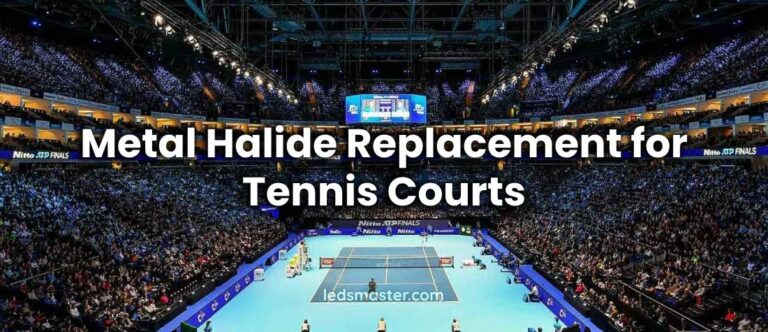

Tennis is a fast-paced game, and every millisecond counts when players are tracking serves, volleys, and high lobs. That’s why consistent, bright lighting isn’t just a luxury—it directly affects player performance. When lights start flickering, dimming, or producing uneven illumination, it can throw off depth perception and reaction time. Even a small drop in visibility can lead to misjudged shots, minor injuries, or just an uncomfortable playing experience.
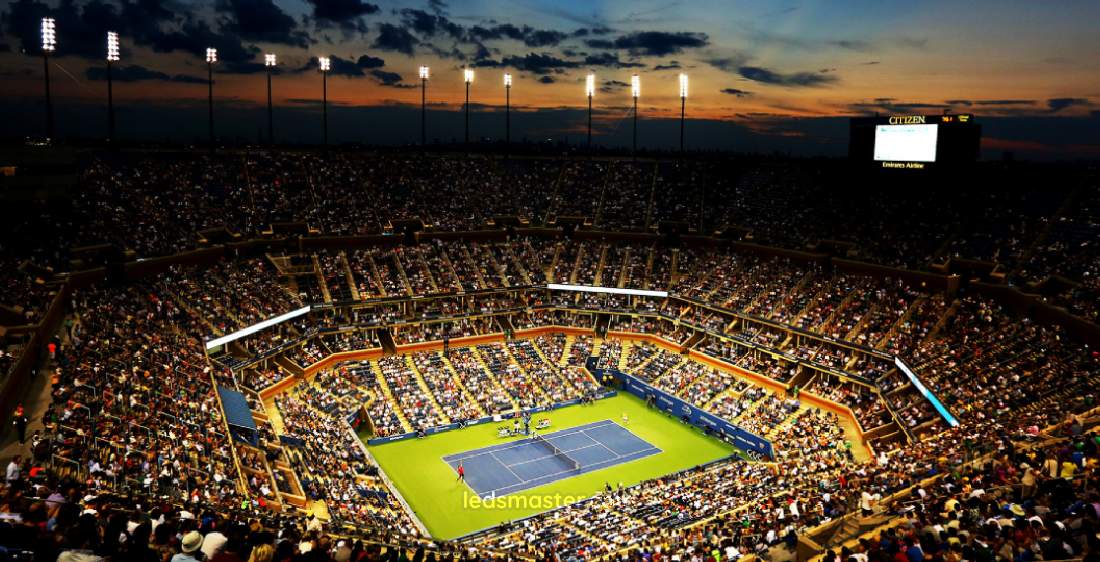
Many outdoor courts still rely on older metal halide, high-pressure sodium, or fluorescent lamps. Over time, these lamps gradually lose brightness. A metal halide lamp rated for 1000 watts might deliver only 60–70% of its initial lumens after 3–4 years. In real terms, horizontal illumination across a standard 23.77 x 10.97 meter tennis court could drop from 800 lux to around 500 lux, making it harder to see lines, the net, and the ball. Uneven patches of light or “hot spots” also appear, which can create shadows near the baseline or net that confuse players during fast rallies.
It’s not just about the quantity of light—the quality of light also deteriorates. Old fixtures often shift in color temperature, producing a yellowish or dull glow that reduces contrast with a yellow or green tennis ball. Glare can become more noticeable as reflectors and lenses wear out or accumulate dust, further straining players’ eyes and reducing court comfort. Spectators, too, notice the difference. A dim or unevenly lit court looks less professional and can affect audience enjoyment during club events or tournaments.
Dimming or flickering lights aren’t just an inconvenience—they can create safety risks. Players may misjudge the speed or trajectory of the ball, leading to slips, collisions, or unexpected impacts. For recreational courts used by beginners or juniors, inconsistent lighting increases the risk of accidental injury. For competitive courts, it can even affect match outcomes, as players are forced to adapt to irregular illumination.
Another reason to replace older lights is energy efficiency. Metal halide or high-pressure sodium fixtures can consume 800–1000 watts per fixture. With 16 fixtures on a standard outdoor court, that’s 12.8–16 kW per hour. Running those lights for just three hours per evening can cost $5–$6 per night, or roughly $1,800–$2,200 per year. LEDs, on the other hand, can deliver the same brightness with just 300–600 watts per fixture, reducing electricity costs by 50–70%, or $700–$1,000 annually for a single court. Over a decade, switching to LED could save upwards of $7,000–$10,000, without compromising brightness or coverage.
Replacing outdated lights is not just an immediate fix—it’s a long-term investment in your facility. Modern LED fixtures last 50,000–100,000 hours, which translates to roughly 10–15 years of typical usage. That’s a massive improvement over metal halides, which often require lamp replacement every 2,000–3,000 hours. Fewer replacements mean less labor, fewer maintenance costs, and minimal disruption to court availability.
By replacing aging fixtures, you also improve uniformity and glare control. Properly selected and installed LEDs can achieve a uniformity ratio above 0.7, meaning the minimum brightness is at least 70% of the average across the court. This ensures players have even light coverage from baseline to net and can track high-speed serves with precision.
Finally, better lighting simply makes the court more enjoyable to play on. Players notice improved ball contrast, reduced eye strain, and fewer complaints about shadows or glare. Club-level courts that host competitions or broadcast games see a dramatic improvement in visibility for cameras and spectators. Even residential or community courts benefit: a well-lit court encourages more evening play, extending usable hours and increasing facility engagement.
Replacing old tennis court lights is not just a maintenance task—it’s an upgrade that enhances safety, visibility, energy efficiency, and the overall experience for players and spectators alike.
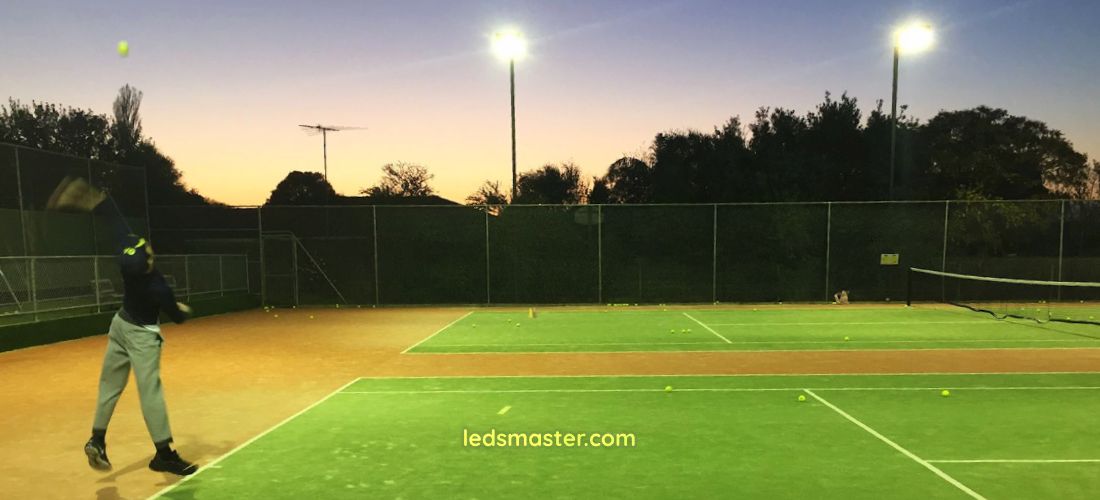
Timing is everything when it comes to tennis court lighting. Replacing fixtures too early might waste money, but waiting too long can compromise visibility, safety, and energy efficiency. Several clear indicators suggest it’s time to consider a retrofit or full replacement.
One of the first signs is flickering. Flicker usually signals that the ballasts or drivers are failing, which is common with older metal halide or fluorescent systems. Even occasional flicker can annoy players, cause eye strain, and affect depth perception during fast rallies. If your court is used for tournaments or broadcasts, flicker becomes even more noticeable on camera, producing uneven light bands that look unprofessional.
Modern LED systems almost eliminate flicker. High-quality drivers provide stable current, so the light stays consistent across the court. Installing LEDs can also improve camera performance if matches are recorded or streamed, since there are no pulsing or fluctuating light artifacts.
Another major sign is dimming. Lamps lose brightness gradually over time. A metal halide fixture rated at 1000 watts might output only 80–90% of its initial lumens after 3–4 years, and by 6–8 years, it could drop to 50–60%. On a standard outdoor court, that could mean horizontal illumination falls below the recommended 500–700 lux for club courts, while vertical lux at 1.5–2 meters above the court might be insufficient for tracking high-speed balls.
Uneven illumination is equally concerning. Older fixtures often create hot spots near the poles while leaving corners dim. This inconsistency affects playability and can increase errors during fast rallies. Replacing or retrofitting lights allows installers to achieve a uniformity ratio above 0.7, ensuring even light coverage across the entire court.
Old lighting systems often generate a lot of heat. Metal halide or high-pressure sodium fixtures can reach 150–200°C on the fixture housing, which wastes energy and increases the risk of overheating drivers, ballasts, and wiring.
Rising electricity bills are another indicator. A 10–12 kW metal halide system running three hours per night can cost $5–$6 per evening, or about $1,800–$2,200 per year. Switching to LED fixtures that use 300–600 watts per fixture can cut costs by 50–70%, reducing annual bills to $700–$1,000 for the same usage. If your bills have been climbing over the past few years, it’s often a sign that retrofitting with energy-efficient LEDs can pay for itself in 3–5 years.
If you’re constantly replacing bulbs, cleaning reflectors, or servicing ballasts, it’s more than just an inconvenience—it’s expensive and disruptive. Traditional lamps often need replacement every 2,000–3,000 hours, while LEDs last 50,000–100,000 hours, translating to roughly 10–15 years of normal use. Retrofitting with LEDs drastically reduces maintenance frequency and downtime, keeping the court available for players and minimizing labor costs.
Other subtle signs include color shifts, glare issues, or flickering caused by corroded connectors. Older fixtures also tend to have poorer IP ratings, so water or dust ingress can slowly degrade performance. If your lighting is over 6–8 years old and showing these symptoms, a retrofit is generally worthwhile, even if the fixtures haven’t completely failed.
Not all tennis court lights age the same way, and knowing which fixtures to swap out can save money and improve court performance. Generally, older metal halide, high-pressure sodium (HPS), and some fluorescent systems are prime candidates for replacement.
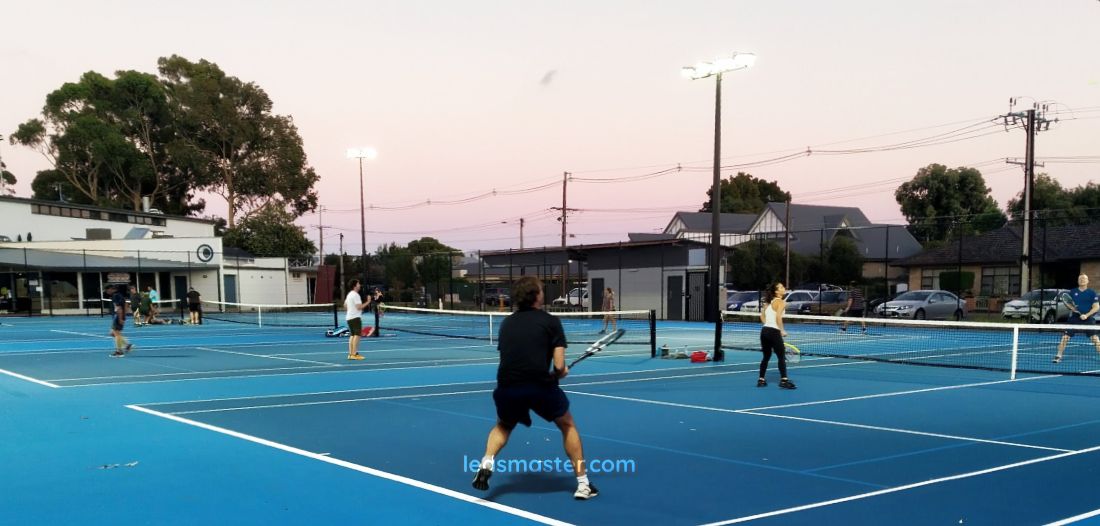
Metal halides used to be the go-to for outdoor sports lighting. Each fixture typically consumes 800–1000 watts, producing a bright but often harsh light. The problem is that they lose brightness quickly over time, sometimes dropping 20–30% in output within 3–4 years. They also have a warm-up period of 5–10 minutes before reaching full brightness, which is inconvenient for casual or spontaneous games.
Replacing metal halide lamps with LED fixtures rated 300–600 watts can achieve similar or better illumination while cutting energy use by 50–70%. LEDs also offer instant-on capabilities, eliminating the warm-up delay and giving consistent light levels for the entire game. Another advantage is that LEDs produce less glare and a more uniform spread across the court, which reduces dark spots near baselines or corners.
HPS lamps are known for their distinctive orange-yellow light. While they can be efficient in raw lumens per watt, the color makes it harder to see a yellow or green tennis ball clearly. Players often struggle to track the ball against the court surface, especially for high-speed serves or lobs.
Switching to LEDs with 5000–5700K color temperature fixes this issue, producing neutral to cool white light that enhances ball contrast and depth perception. LEDs also maintain color quality over time, whereas HPS lamps can shift further toward yellow-orange as they age, reducing visibility.
While rare on outdoor courts today, some smaller or older facilities still have fluorescent tubes. These are prone to flicker, have limited lumen output, and typically require 40–80 watts per tube to produce adequate light. Replacing them with compact LED floodlights or retrofit kits dramatically increases brightness and uniformity while reducing maintenance needs.
Not every replacement requires installing brand-new poles or complete fixtures. In many cases, retrofit kits can convert existing metal halide or HPS fixtures into LED systems. These kits usually include LED lamps and compatible drivers that fit into the old housing, cutting costs by 30–50% compared to a full replacement. Retrofitting also reduces labor because you don’t need to move or anchor new poles, making it a practical option for club courts or community facilities with limited budgets.
Even with retrofits, it’s important to check the fixture’s physical condition. Poles or housings that are corroded, bent, or unstable may still need replacement to ensure safety and proper beam alignment. The right combination of retrofitted LEDs and solid fixtures can extend the life of your court lighting by 10–15 years, while saving thousands on electricity and maintenance.
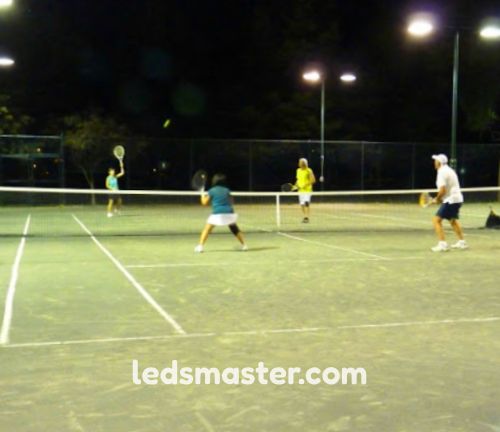 Switching to LED lighting isn’t just about better visibility—it can have a major impact on the bottom line. From energy bills to maintenance costs, the numbers really add up over time.
Older metal halide fixtures are power-hungry. A standard outdoor court with 16 metal halide fixtures at 400 watts each draws about 6.4 kW when all lights are on. Running the system for three hours per night can cost roughly $5–$6 per night, which adds up to $1,800–$2,200 annually for a single court.
Switching to 300–400 watt LED fixtures drops total consumption to about 4.8–6.4 kW, but because LEDs are more efficient, the actual energy used is lower, costing around $2–$3 per night. Over a year, that’s a savings of $700–$1,000, and over a decade, courts can save $7,000–$10,000 on electricity alone. For facilities with multiple courts, these savings multiply quickly, making LED conversion financially attractive.
Maintenance is another area where LEDs outperform older systems. Metal halide lamps usually last 2,000–3,000 hours, meaning a busy club might need to replace bulbs two to three times a year. Each replacement often involves labor costs of $100–$200 per bulb, plus fixture downtime, which can disrupt play.
LEDs, on the other hand, have lifespans of 50,000–100,000 hours, roughly 10–15 years of normal use. That drastically cuts the number of replacements, reducing labor, downtime, and purchase costs. Over five years, a single court can save $2,000–$4,000 just from fewer bulb changes. For larger facilities with multiple courts, the savings scale even higher, freeing up budget for other upgrades.
Beyond the financial benefits, LEDs improve light quality in ways that also save money indirectly. Horizontal and vertical illuminance becomes more consistent, which reduces shadows and glare. Players can track balls more easily, decreasing complaints and potential safety issues.
Uniform, high-quality light can also improve club or community satisfaction. Courts that are brighter and more pleasant to play on may see increased usage, higher membership retention, and even the ability to host tournaments or league play, which can bring in extra revenue. So, the upgrade isn’t just about cutting costs—it’s also an investment in facility appeal.
Lower energy consumption translates into reduced carbon footprint, which may qualify clubs or schools for rebates or incentives from local utilities. Some programs offer 10–30% rebates for energy-efficient LED installations, further boosting savings. Additionally, fewer replacements mean less waste from old lamps and ballasts, contributing to a greener operation.
Replacing tennis court lights isn’t just a matter of screwing in new bulbs. A few practical tips can make the process smoother, safer, and more cost-effective, while maximizing the benefits of upgraded LEDs.
Before buying new fixtures, take a close look at the poles and mounting hardware. Poles older than 15–20 years may have corrosion, weakened welds, or minor bends that aren’t obvious from the ground. Even if the new lights are high-quality LEDs, unstable poles can cause vibration, uneven illumination, or damage over time.
If the poles are still solid but show minor rust or loose brackets, reinforcing them with steel sleeves, anchor bolt tightening, or fresh concrete footings may be enough. For poles that are seriously corroded or wobbly, replacing them entirely—especially for taller 10–12 meter poles—prevents safety hazards and ensures proper fixture alignment.
The wattage and color temperature of new LEDs directly impact visibility, energy consumption, and player comfort. Recreational courts usually do well with 300–400 watt fixtures, providing 36,000–48,000 lumens per fixture. Club-level or tournament courts typically need 500–600 watt LEDs, delivering 60,000–80,000 lumens for more uniform lighting.
Color temperature also matters. 5000–5700K LEDs mimic daylight, improving contrast for yellow or green tennis balls and reducing eye strain. Warmer lights below 4000K may feel cozy but reduce contrast, while extremely cool lights above 6000K can feel harsh. Matching wattage and color temperature to the intended use ensures both comfort and efficiency.
Asymmetric optics are a game-changer for outdoor tennis courts. These fixtures focus light forward and downward, reducing glare in players’ eyes and minimizing spillover onto neighboring homes or streets. For courts near residential areas, this can prevent complaints and even comply with local light pollution regulations, which often limit light spill to less than 5 lux at 10 meters beyond the property line.
After installation, measuring light levels is essential. Horizontal lux measures the playing surface, while vertical lux (typically at 1.5–2 meters above the court) ensures players can track balls in the air. Aim for a uniformity ratio above 0.7, which means the minimum brightness is at least 70% of the average.
For reference, recreational courts usually target 300–500 lux horizontal, while club courts aim for 700–1,000 lux, and professional setups may reach 1,300–1,500 lux. Vertical lux should be 400–600 lux for club courts to allow clear tracking of high-speed serves and lobs. Using a lux meter during setup avoids uneven lighting or dark corners.
Modern LED systems often allow integration with timers, dimmers, or even motion sensors. These systems let you run only half the court for practice or dim lights for casual evening play, which can reduce energy use by 30–40% and extend fixture lifespan. For clubs or community courts, smart controls can also help manage electricity bills, which otherwise can run $2–$6 per night per court depending on fixture type.
Tall poles usually require lifts or cranes to service lights, which can be expensive and inconvenient. Telescoping or tilting poles let you lower fixtures for maintenance, reducing costs and increasing safety. If your court has 10–12 meter poles, planning for maintenance access upfront can save hundreds or even thousands of dollars over the lifetime of the system.
Outdoor courts face rain, high humidity, and sometimes coastal salt air. Choosing fixtures with IP65 or higher ensures resistance to water and dust. Weatherproof connectors, silicone seals, and marine-grade fittings prevent corrosion and premature fixture failure, particularly in coastal or humid regions. Cutting corners here can lead to costly replacements within just a few years.
While DIY might seem tempting, hiring a licensed electrician experienced in sports lighting is usually money well spent. Proper wiring, grounding, and fixture aiming prevent energy waste, protect the system, and maintain warranty coverage. For a single-court installation, professional labor typically costs $2,000–$5,000, and while it adds upfront cost, it can prevent repeated mistakes or uneven lighting that would cost more over time.
Replacing old tennis court lights may seem expensive at first glance, but the benefits go far beyond simple visibility. Players get better, more consistent lighting, electricity bills drop, and long-term maintenance headaches are reduced. With modern LEDs, courts can run more efficiently for decades, improving the experience for players and keeping costs manageable for clubs and community facilities alike.