
Step onto an offshore oil rig and the environment speaks for itself. Salt-heavy air, constant wind, vibration from machinery, moisture that never really disappears, and the presence of flammable gases all exist at the same time. Lighting in this setting is not about aesthetics or convenience. It’s about durability, visibility, and long-term performance under pressure.
Oil rigs operate 24 hours a day, often hundreds of kilometers from shore. Once lighting systems are installed, replacing or repairing them can cost tens of thousands of dollars per trip. That reality shapes every decision, from materials to certifications. The lights used on oil rigs are engineered for extremes, and each type plays a specific role across the platform.
Why Oil Rigs Demand Specialized Lighting
Unlike land-based industrial sites, offshore platforms face continuous exposure to saltwater spray, humidity close to 100 percent, and temperature swings that can range from below freezing to over 50°C near engines and processing areas. Corrosion alone can destroy standard fixtures within months.
There’s also the issue of hazardous atmospheres. Many areas on an oil rig contain hydrocarbons that can ignite if a spark or excessive heat is present. Lighting systems must be designed so that even internal electrical faults cannot trigger an external ignition.
On top of that, rigs rarely shut down. Crews work in rotating shifts, helicopters arrive at night, and maintenance happens alongside live production. Lighting needs to stay stable, predictable, and consistent year after year, not just when conditions are ideal.
Standards and Certifications That Shape Offshore Lighting
Lighting on oil rigs isn’t something manufacturers can just design freely and hope for the best. Offshore environments are heavily regulated, and for good reason. Every fixture installed on a platform needs to prove, on paper and in testing labs, that it can survive heat, pressure, vibration, saltwater, and hazardous gases at the same time. That’s where standards and certifications step in and quietly dictate almost every detail of the design.
Explosion-Proof and Hazardous Area Compliance
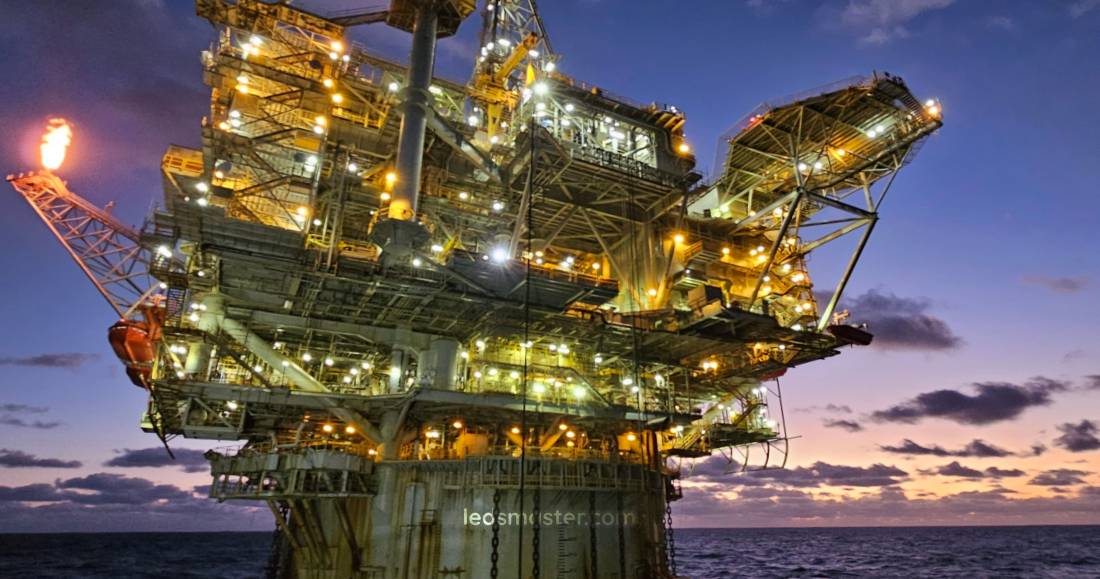
In offshore oil and gas projects, explosion-proof lighting is usually the first requirement discussed. Most rigs operate under ATEX or IECEx frameworks, depending on whether the project follows European or international standards. These certifications define hazardous zones such as Zone 1, where flammable gas can be present during normal operations, and Zone 2, where it appears only occasionally, usually during abnormal conditions or maintenance.
What often gets misunderstood is the meaning of explosion-proof. It doesn’t mean the light can’t fail. Electronics can still overheat, drivers can still malfunction, and components can still wear out over time. The real idea is containment. If an internal fault creates sparks, heat, or even a small explosion, the enclosure is built to trap all of that energy inside. Nothing ignites the surrounding atmosphere.
This requirement explains why explosion-proof luminaires feel so solid in your hands. It’s common for them to weigh two to three times more than standard industrial LED lights of similar output. Thick aluminum or stainless steel housings, flame paths, reinforced glass, and heavy-duty cable entries all add weight, but they also add peace of mind offshore.
Understanding Zone Ratings and Real-World Use
Zone classifications aren’t just theoretical labels. On a working rig, Zone 1 areas often include drilling floors, mud processing zones, gas compression skids, and areas around separators. Zone 2 might cover surrounding walkways or nearby equipment spaces. Lighting layouts are planned carefully so the right fixture is installed in the right zone, with zero room for improvisation later on.
Operators typically build in a safety margin as well. A light rated only for Zone 2 may technically pass on paper, but many offshore projects still specify Zone 1-rated fixtures across wider areas to reduce risk and simplify maintenance planning.
Marine and Offshore Requirements Beyond Explosion Protection
Explosion-proof certification alone isn’t enough offshore. Once a fixture is mounted outside, it immediately faces another enemy: seawater. Salt doesn’t just sit on the surface; it creeps into joints, attacks coatings, and speeds up corrosion in ways that don’t happen on land.
That’s why marine-grade protection ratings are always part of the conversation. IP66 is usually the minimum, meaning the fixture is fully protected against powerful water jets. For exposed decks and handrail-mounted lights, IP67 or even IP68 is often specified, ensuring the fixture can survive temporary or continuous immersion.
NEMA 4X ratings are also common in offshore specifications. This standard focuses heavily on corrosion resistance, especially in salt-laden air. It’s one reason why offshore lights often use 316L stainless steel hardware and specially formulated powder coatings that can last 10 years or more without peeling.
Role of Third-Party Offshore Approvals
Many oil companies and EPC contractors don’t stop at basic certifications. They ask for third-party approvals from organizations like DNV, ABS, or Lloyd’s Register. These bodies look at more than just electrical safety. They evaluate material selection, sealing concepts, fastener quality, and long-term performance in offshore conditions.
A light approved by one of these organizations has usually gone through additional inspections and audits, which adds confidence for operators investing in equipment expected to last through multiple production cycles.
Mechanical and Environmental Testing Behind the Scenes
Before a single light is installed offshore, it usually survives a long list of tests that try to mimic years of harsh exposure. Vibration testing simulates the constant shaking caused by rotating machinery and wave motion. Impact testing checks whether lenses and housings can handle accidental knocks from tools or equipment.
Thermal cycling is another big one. Fixtures are repeatedly heated and cooled to mimic day-night temperature swings and hot equipment nearby. Some luminaires also spend over 1,000 hours in salt spray chambers, where fine salt mist attacks every exposed surface. Passing these tests doesn’t mean the light will last forever, but it shows the design has a fighting chance offshore.
| Lighting Type | Typical Application | Key Features | Common Standards |
|---|---|---|---|
| Explosion-Proof Lighting | Drilling floors, wellheads, process areas | Heavy-duty housing, spark containment, high-temperature tolerance | ATEX, IECEx, Class I Div 1/2 |
| Marine-Grade Lighting | Open decks, walkways, staircases | Seawater-resistant materials, anti-corrosion coatings, sealed design | IP66–IP68, NEMA 4X |
| High-Mast / Area Lighting | Deck yards, crane zones, storage areas | Wide beam coverage, wind-resistant structure, glare control | IP66+, marine/offshore approvals |
| Task & Workstation Lighting | Control panels, maintenance zones | Focused illumination, high CRI, adjustable mounting | ATEX / IECEx (when required) |
| Emergency & Escape Lighting | Escape routes, muster stations | Battery backup, automatic activation, long runtime | SOLAS, offshore safety codes |
| Helideck Lighting | Helicopter landing areas | Precise brightness, color consistency, corrosion resistance | ICAO, CAP 437 |
| Portable Explosion-Proof Lighting | Inspections, shutdowns, confined spaces | Impact-resistant, rechargeable or wired, flexible deployment | ATEX, IECEx |
| Temporary Work Lighting | Short-term projects, retrofits | Easy installation, rugged build, stable output | Offshore project specs |
Explosion-Proof Lighting in Process Areas
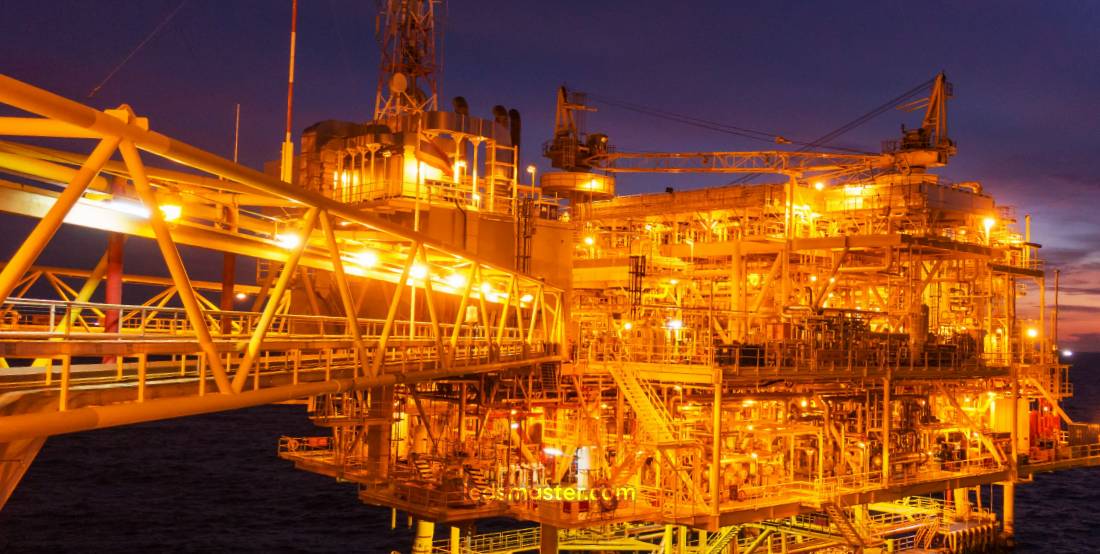
Explosion-proof lights are the workhorses of oil rig illumination. They dominate process areas where hydrocarbons are handled, compressed, or separated. These zones combine high temperatures, pressurized systems, and flammable gases, which makes lighting design especially demanding.
Modern explosion-proof luminaires are almost entirely LED-based now. Compared to older metal halide systems, LEDs typically cut power consumption by 40 to 60 percent while delivering similar or higher light output. On a platform running hundreds of fixtures, that reduction adds up quickly, especially when power is generated onsite.
Heat Management and Surface Temperature Control
One underrated advantage of LED explosion-proof lighting is lower surface temperature. Traditional lamps can run extremely hot, sometimes exceeding 200°C at certain points. LEDs, combined with proper heat sinks, keep external temperatures much lower. That reduces thermal stress on seals and lowers the chance of igniting gases nearby.
This also helps with longevity. Many explosion-proof LED lights are rated for 50,000 to 100,000 operating hours, which translates to 10 years or more in continuous-use environments. For offshore operators, fewer replacements mean fewer maintenance trips and less exposure for crews.
Materials Built for Offshore Abuse
Material choice is where explosion-proof lights really show their offshore DNA. Housings are commonly made from copper-free aluminum to avoid sparking risks, or from 316L stainless steel for maximum corrosion resistance. Lenses are thick tempered glass or borosilicate glass, sometimes more than 10 mm thick, designed to handle both internal pressure and external impact.
Cable glands, gaskets, and fasteners are equally important. A single weak seal can allow moisture in, leading to slow internal corrosion. That’s why offshore-grade explosion-proof lights often look overengineered compared to standard industrial fixtures. Offshore experience has taught designers that “good enough” rarely survives at sea.
In practice, these lighting systems become part of the rig’s long-term infrastructure. Once installed, they’re expected to work quietly in the background, year after year, through storms, heat, and constant vibration. That expectation is exactly what drives the strict standards and heavy-duty designs seen across offshore oil and gas platforms.
Marine-Grade and Seawater-Resistant Lighting
If explosion-proof lighting is about handling risk from gases, marine-grade lighting is about surviving the ocean itself. Offshore platforms sit in one of the most aggressive natural environments on the planet, and seawater is the main reason why ordinary industrial lights fail so quickly offshore.
Why Seawater Is So Destructive Offshore
Saltwater doesn’t behave like rain or fresh water. It actively speeds up corrosion, especially when different metals are in contact with each other. This process, known as galvanic corrosion, can eat through housings, brackets, and fasteners much faster than people expect. In some offshore cases, standard industrial fixtures show visible corrosion in less than 12 months.
Seals also take a beating. Salt crystals form as water evaporates, slowly working their way into microscopic gaps around lenses and cable entries. Even stainless steel isn’t immune. If the wrong grade is used, or if surface treatment is poor, pitting corrosion can start surprisingly fast.
That’s why offshore lighting leans heavily on marine-grade materials, protective coatings, and proven construction methods. Powder coatings are rarely single-layer. Many offshore fixtures use two or even three coating layers, sometimes exceeding 120 microns in thickness, to delay corrosion as long as possible. Fasteners are chosen just as carefully, often using 316 or 316L stainless steel exclusively to avoid mixed-metal reactions.
Materials That Actually Hold Up at Sea
In real offshore projects, aluminum housings are usually marine-grade alloys, not generic cast aluminum. Stainless steel versions, especially 316L, are common in highly exposed areas. Brackets and mounting hardware are often oversized, not for looks, but to handle corrosion loss over time without compromising structural strength.
Lens materials matter too. Toughened glass or borosilicate glass is preferred over plastics, which can cloud, yellow, or crack after years of UV exposure and salt spray.
Design Features That Matter Offshore
Good offshore lighting design is mostly about sealing and pressure control. Seawater-resistant lights are fully sealed, often using double O-ring systems around lenses and critical joints. One seal alone isn’t trusted offshore. Redundancy is built in from the start.
Pressure-equalizing vents are another quiet hero in these designs. As temperatures change between day and night, internal pressure shifts. Without proper venting, seals are slowly stressed and eventually fail. Offshore-rated vents allow air to move while blocking moisture and salt, reducing condensation buildup inside the fixture.
Cable entries deserve special attention. In many real-world failures, the light itself survives but the cable gland doesn’t. Offshore-grade lights use certified glands and sealing compounds that stay flexible over time. Cheap compounds can harden and crack after a few years, creating a hidden path for moisture.
Long-Term Reliability in Harsh Weather
Storms, constant wind, and horizontal rain are part of daily life offshore. Marine-grade lights are tested to ensure water doesn’t enter even under strong spray conditions. IP66 is usually the minimum, but exposed fixtures often go IP67 or IP68 to handle occasional immersion.
The goal isn’t perfection, but consistency. Offshore operators expect these lights to perform year after year with minimal intervention, even when conditions are far from gentle.
Where Marine-Grade Lights Are Commonly Used
Marine-grade lighting is everywhere on an oil rig. Open decks, walkways, staircases, handrails, and external structures all rely on these fixtures. They may not always need explosion-proof certification, depending on the zone, but they still have to withstand constant exposure to salt air, rain, and UV radiation.
On some platforms, more than 60 percent of installed fixtures fall into this marine-grade, non-process category. While they don’t get as much attention as explosion-proof lights, their failure can still affect safety, movement, and daily operations.
High-Mast and Area Lighting on Decks
Large deck areas are some of the most visually demanding spaces on an oil rig. Cranes swing heavy loads, pipe racks stretch across wide zones, and storage areas stay active well into the night. All of this requires broad, even lighting that avoids harsh shadows.
High-mast LED floodlights are the go-to solution. These fixtures are designed to throw light over long distances while maintaining uniform coverage. Offshore versions are built with reinforced brackets and housings rated for wind speeds exceeding 150 km/h, sometimes higher depending on project specifications.
Managing Glare and Visibility Offshore
Glare control is a bigger issue offshore than many people realize. Excessive brightness can disorient workers moving between dark and bright zones. It can also interfere with helicopter pilots during approach and landing.
Modern LED floodlights use carefully designed optics to shape the beam and reduce spill light. This improves visibility on deck while keeping light where it’s actually needed.
Energy and Maintenance Savings Over Time
Compared to traditional metal halide systems, LED floodlights reach full brightness instantly and maintain stable output over their lifespan. Metal halide lamps can lose up to 30 percent of their brightness over time, often without crews noticing until visibility becomes an issue.
Over a five-year period, reduced energy use and fewer maintenance visits can easily translate into six-figure cost savings for a single offshore platform. When access requires helicopters or vessels, every avoided replacement matters.
Task and Workstation Lighting Offshore
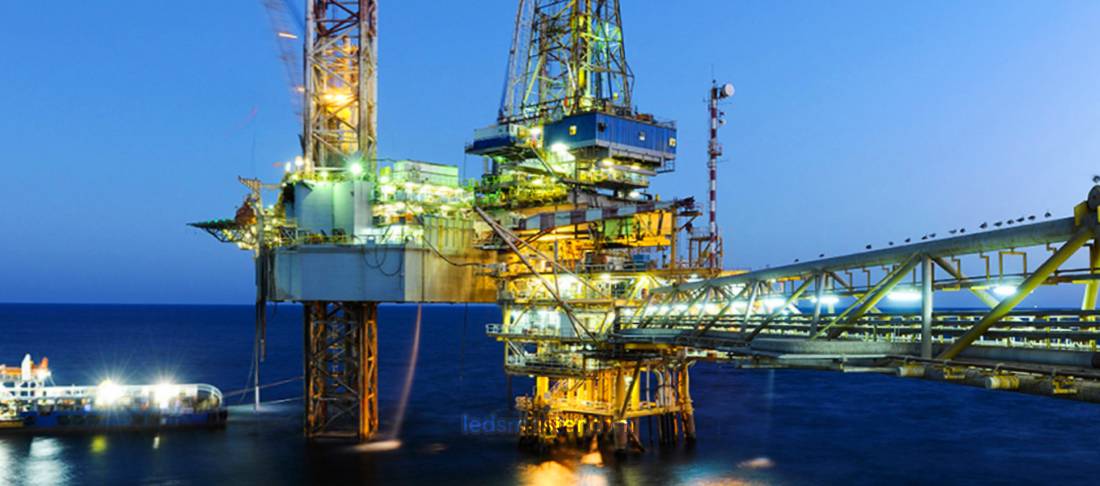
Not all offshore lighting is about lighting up big spaces. Control rooms, electrical panels, workshops, and maintenance zones demand a more personal approach. Crews often work 12-hour shifts, and poor lighting can lead to fatigue and mistakes.
Task lighting focuses on comfort as much as visibility. Explosion-proof task lights are commonly installed in hazardous areas, mounted on adjustable arms or fixed brackets to direct light exactly where it’s needed.
Portable Lighting for Maintenance and Inspections
Portable task lights are especially popular offshore. Units with magnetic bases or clamp mounts allow crews to quickly set up temporary lighting during inspections or repairs. These lights are built to handle drops, vibration, and frequent movement, which is why they often look as rugged as fixed fixtures.
Battery-powered versions have improved significantly in recent years, with runtimes exceeding 8 to 12 hours on a single charge, making them practical for long maintenance tasks.
Color Rendering and Visual Comfort
Color rendering plays a bigger role than people expect. LEDs with a CRI above 80 are commonly selected so wiring colors, labels, gauges, and warning markings remain easy to distinguish. In offshore environments where space is tight and systems are complex, clear visibility helps crews work more confidently and efficiently.
Emergency and Escape Route Lighting
When something goes wrong offshore, lighting instantly shifts from being a background system to something crews rely on instinctively. Power loss, equipment failure, or extreme weather can turn familiar spaces into confusing, high-stress environments. That’s where emergency and escape route lighting quietly does its job.
Emergency luminaires on oil rigs are designed to switch on automatically the moment normal power is lost. Most systems are required to operate for at least 90 minutes, but many offshore projects push that to 120 minutes or more, especially on larger platforms where evacuation routes are longer. The idea is simple: lighting should never be the reason people hesitate or lose their way.
Guiding People, Not Just Lighting Spaces
Emergency lighting offshore isn’t about flooding areas with brightness. It’s about guidance. Fixtures are positioned to clearly mark escape routes, stairways, doors, muster stations, and lifeboat boarding areas. The light output is carefully controlled so paths are visible without causing glare or confusion.
In many installations, powered emergency lights are paired with photoluminescent markings. These glow-in-the-dark strips and signs don’t rely on electricity at all. If smoke, heavy rain, or a secondary failure affects visibility, these passive markers still provide directional cues. Offshore operators like this layered approach because it doesn’t depend on a single system working perfectly.
Built for Reliability Under Pressure
Reliability is everything in emergency lighting. Batteries, drivers, and control circuits are tested more aggressively than standard luminaires. Battery packs are selected to handle temperature extremes and are often rated for 5 to 10 years of service before replacement.
Self-testing and monitoring features are also becoming more common. These systems regularly check battery health and lamp function, allowing maintenance teams to spot issues long before an actual emergency occurs. Offshore crews may never notice these lights during daily operations, but when they’re needed, they’re expected to work without hesitation.
Helideck Lighting for Offshore Aviation
Helideck lighting sits at the intersection of offshore engineering and aviation safety. It’s one of the most specialized lighting systems on an oil rig, and also one of the most closely regulated. Helicopters often land at night, in fog, rain, or strong winds, and pilots depend heavily on visual references during the final approach.
Precision Matters on the Helideck
Helideck lighting systems typically include perimeter lights, floodlights, aiming circle lights, touchdown markings, and obstruction lights. Each one has a specific role in helping pilots judge height, alignment, and deck boundaries.
Unlike general deck lighting, helideck lights must deliver consistent brightness and color across the entire landing area. Even small variations can affect depth perception, especially in low-visibility conditions. That’s why fixtures are designed with tight optical control and stable LED drivers that resist output fluctuation over time.
Standards That Leave Little Room for Error
International standards such as ICAO and CAP 437 define exactly how helideck lighting should look and perform. These documents specify mounting heights, light spacing, intensity levels, and even color temperature ranges. Compliance isn’t optional, and inspections are frequent.
Corrosion resistance is just as important here as optical performance. Helideck lights are fully exposed, often mounted at low points where water can pool. Marine-grade housings, sealed optics, and robust cable protection help ensure these fixtures remain reliable despite constant exposure to salt spray and UV radiation.
Portable and Temporary Lighting Solutions Offshore
Not every lighting need offshore is permanent. During shutdowns, upgrades, inspections, or unplanned repairs, temporary lighting becomes part of everyday work. These situations often involve confined spaces, awkward angles, and time pressure, which is why portable lighting plays such a big role.
Flexible Lighting for Changing Work Conditions
Portable explosion-proof LED lights are widely used in tanks, enclosed modules, and temporary work zones. These lights are compact but tough, designed to handle drops, vibration, and frequent relocation without losing performance.
Rechargeable models are popular for short to medium tasks, offering runtimes that now commonly reach 8 to 12 hours on a single charge. For longer jobs, wired portable lights are still preferred, providing stable output without worrying about battery limits.
Built to the Same Offshore Expectations
Even though they’re temporary, portable lights offshore are built to the same standards as fixed installations. Explosion-proof ratings, IP66 or higher sealing, and impact-resistant housings are common. Many units also include runtime indicators or low-battery warnings so crews can plan their work instead of being caught off guard by sudden darkness.
Consistency is the key. When crews move between fixed lighting and temporary setups, the quality and reliability shouldn’t feel different. Offshore operations depend on that predictability, whether the light is bolted in place or carried by hand.
Why LED Technology Dominates Offshore Lighting
Over the past decade, LED lighting has gone from being a “nice to have” offshore to the default choice for most new platforms and retrofit projects. The shift didn’t happen overnight, and it wasn’t driven by marketing hype. It happened because LEDs simply fit the realities of offshore operations better than older lighting technologies ever could.
Energy Efficiency Where Power Is Limited
Power offshore is never unlimited. Whether electricity is generated by gas turbines or diesel generators, every extra kilowatt adds fuel consumption, heat, and wear on equipment. This is where LEDs make an immediate impact.
A single LED fixture can reduce electrical load by 200 to 500 watts compared to traditional metal halide or high-pressure sodium lights delivering similar brightness. Multiply that across dozens or even hundreds of fixtures on a platform, and the savings become impossible to ignore. Lower power demand also means less stress on generators and more capacity available for other systems.
For offshore operators, this isn’t just about energy bills. It’s about efficiency, fuel logistics, and long-term operational stability.
Lower Heat, Longer Life
Heat is the enemy of electronics, seals, and coatings. Traditional lighting technologies generate a lot of it, and offshore environments already push components to their limits. LEDs operate at much lower temperatures, which helps in several ways.
Lower surface temperatures reduce thermal stress on gaskets and cable entries. Internal components last longer, and the risk of seal failure drops significantly. In hazardous areas, lower heat output also adds another safety margin by reducing external surface temperatures.
Many offshore-rated LED fixtures are designed for 50,000 to 100,000 hours of operation. In practical terms, that can mean 10 years or more of service in continuous-use areas. For platforms where accessing a single light can require scaffolding, permits, or even helicopter support, that longevity makes a real difference.
Maintenance Reduction Offshore
Maintenance offshore is expensive, slow, and sometimes risky. Every avoided lamp replacement reduces exposure for crews and frees up time for other work. LEDs don’t just last longer; they maintain their brightness more consistently over time.
Older metal halide lamps can lose 20 to 30 percent of their output long before they fail completely. LEDs fade much more gradually, which keeps visibility stable and predictable. That consistency matters in work areas where people rely on familiar lighting conditions shift after shift.
Smart Features Designed for Hazardous Areas
LED technology has also opened the door to smarter lighting systems offshore. Condition monitoring is becoming more common, allowing operators to track driver health, temperature, and operating hours remotely. Instead of waiting for a failure, maintenance teams can plan interventions well in advance.
Dimming and control functions are another growing trend. In non-critical areas, light levels can be adjusted based on activity, time of day, or operational needs. All of this is done within the constraints of hazardous area certification, so safety standards remain intact.
These features help operators move from reactive maintenance to a more predictable, planned approach, which fits well with offshore operating philosophies.
Common Offshore Lighting Challenges and How They’re Addressed
Even with modern technology, offshore lighting still faces challenges that don’t exist on land. The difference today is that many of these problems are well understood, and designs have evolved to deal with them more effectively.
Fighting Corrosion in a Salt-Rich Environment
Corrosion remains the number one cause of lighting failure offshore. Salt air, constant moisture, and temperature changes work together to attack metal surfaces relentlessly. Manufacturers respond with careful material selection, using marine-grade aluminum alloys or 316L stainless steel, depending on exposure level.
Coating systems have also improved. Multi-layer powder coatings and surface treatments slow down corrosion and help fixtures maintain structural integrity over many years. Joints and fasteners are designed to minimize water traps, which are common starting points for corrosion damage.
Protecting Seals and Internal Components
Seal degradation is another common issue offshore. Gaskets that work fine on land may harden, crack, or shrink when exposed to heat, salt, and UV radiation. Offshore-rated lighting uses high-quality elastomers tested for long-term flexibility under harsh conditions.
Pressure compensation systems also play a role. By allowing internal pressure to equalize as temperatures change, these systems reduce stress on seals and lower the risk of moisture ingress over time.
Keeping Optics Clear and Reliable
Lens clarity can affect lighting performance more than people realize. Clouded or yellowed lenses reduce light output and create uneven illumination. Offshore fixtures address this with UV-resistant glass, surface treatments, and lens materials chosen specifically for long-term exposure.
These details might not be obvious at first glance, but they explain why offshore lights often look heavier and more rugged than their onshore counterparts. That appearance isn’t accidental. It reflects decades of lessons learned from equipment that had to survive storms, salt spray, vibration, and round-the-clock operation.
A Practical Perspective on Oil Rig Lighting
Lighting on oil rigs is about trust. Crews need to know that when they walk onto a deck at 3 a.m. or respond to an alarm in rough weather, the lights will perform exactly as expected. That confidence comes from rigorous standards, proven materials, and designs shaped by real-world offshore conditions.
For operators, the right lighting choices reduce downtime, maintenance costs, and operational risk over the long term. For manufacturers and engineers, it’s a constant balance between innovation and reliability.
If you’re planning an offshore project or upgrading existing systems, working with people who understand both the standards and the realities of offshore life makes a real difference. Our team is always happy to discuss lighting solutions, compliance requirements, and practical design considerations tailored to oil rigs and other demanding environments. Reach out anytime for a conversation or consultation.