
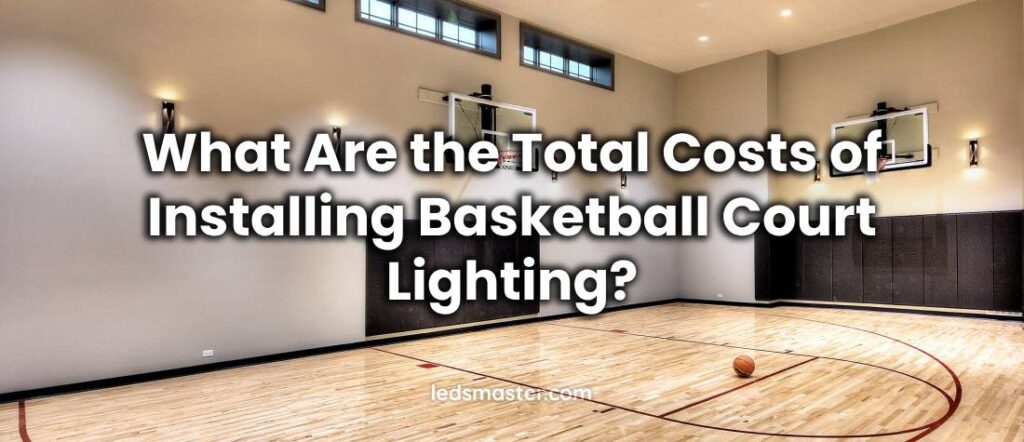
Lighting installation for basketball courts involves several layers of financial planning, starting from the initial setup to ongoing operational expenses. Whether for a small recreational court or a professional-grade facility, costs vary based on multiple variables including court size, lighting technology, and intended use. From basic outdoor community courts to professional indoor arenas, the total cost is shaped by the level of performance expectations, compliance requirements, and energy strategies.
Common Cost Range of Basketball Court Lighting Installation for Different Competition Levels
The cost of installing basketball court lighting varies widely depending on the competition level and specific facility requirements. From informal outdoor courts in community parks to professional arenas equipped with broadcast-level lighting, prices reflect performance demands, safety standards, and technology sophistication. Key factors influencing cost include lighting intensity, fixture quality, control systems, mounting structures, and regional labor rates.
| Competition Level | Typical Fixture Count | Fixture Cost Range (Each) | Estimated Installation Cost |
|---|---|---|---|
| Recreational/Community Outdoor | 6 – 12 | $150 – $400 | $4,000 – $15,000 |
| High School/Multi-Purpose Indoor | 20 – 30 | $400 – $900 | $25,000 – $50,000 |
| College/Semi-Professional | 30 – 50 | $800 – $1,200 | $60,000 – $120,000 |
| Professional/Televised Venue | 50 – 100+ | $1,200 – $2,000+ | $150,000 – $300,000+ |
Recreational and Community-Level Outdoor Courts
Outdoor basketball courts in parks and local communities typically prioritize basic visibility and player safety over high-performance illumination. These setups generally utilize 6 to 12 LED floodlights, mounted on existing poles or newly installed ones between 20 to 30 feet tall. Total costs range from approximately $4,000 to $15,000, depending on site preparation needs. If power sources are already available, this can reduce expenses by as much as 20%. The fixtures themselves often range between $150 and $400 each, with lower-end models common at this level. Installation labor may cost between $1,500 and $3,000, reflecting simpler mounting and minimal control system requirements. These courts do not typically include programmable controls or advanced uniformity features, keeping both material and labor costs moderate.
High School and Multi-Purpose Gymnasium Courts
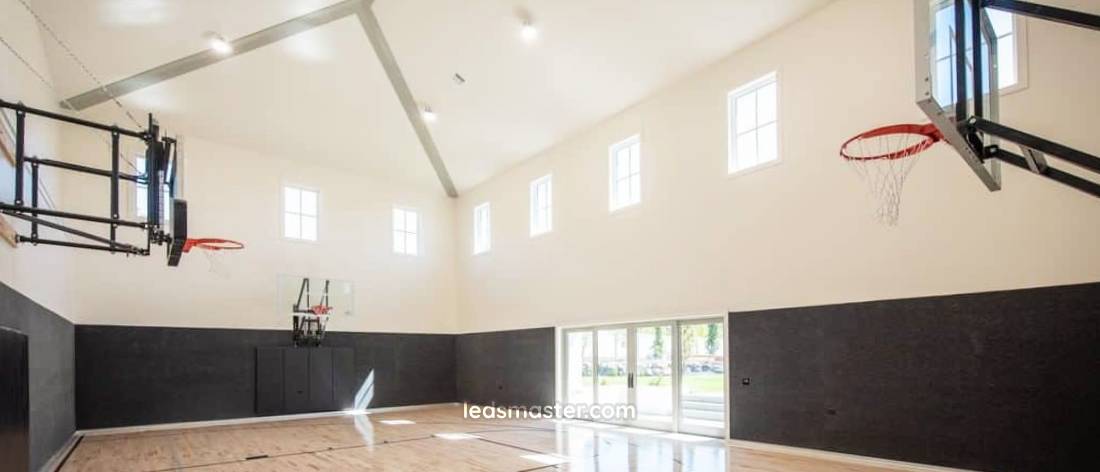
Indoor high school basketball courts, often designed for multiple uses, require higher uniformity and color rendering standards, with recommended illumination levels of 300 to 500 lux. These systems typically consist of 20 to 30 high-output LED fixtures, each costing between $400 and $900 depending on brand and efficiency. Installation labor tends to be more intensive, involving mounting to suspended ceilings or trusses at heights ranging from 25 to 35 feet. This can push labor costs between $10,000 and $15,000, with total project budgets falling between $25,000 and $50,000. Electrical upgrades, such as panel replacements or conduit installation, may add $5,000 to $10,000 to the project. Multi-use requirements also drive the inclusion of basic dimming controls and zoning, which can increase costs by around 10-15% but improve operational flexibility.
College, University, and Semi-Professional Courts
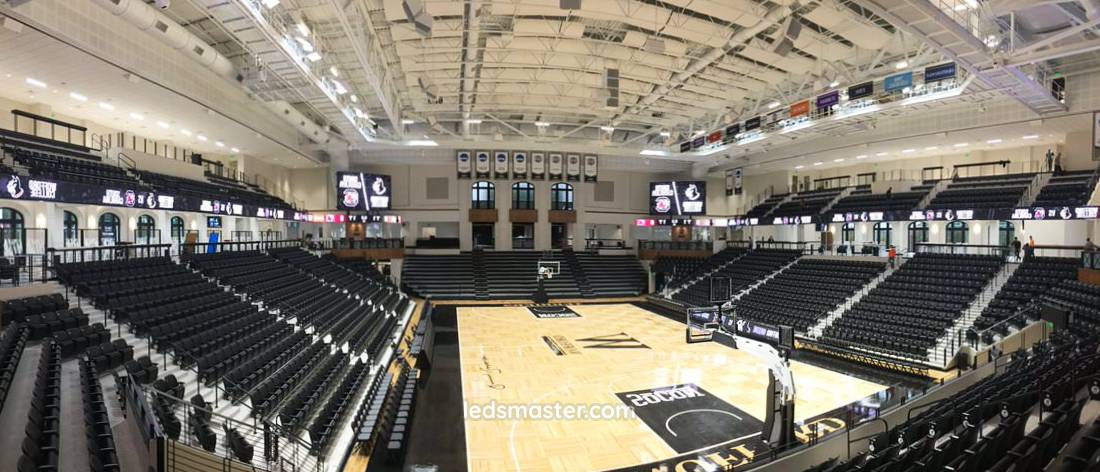
At the college and semi-professional level, lighting specifications jump significantly to meet broadcast-quality standards with illuminance levels often between 750 and 1,200 lux on the playing surface. These installations typically involve 30 to 50 specialized LED fixtures costing between $800 and $1,200 each due to custom optics and beam control. Professional lighting designers and engineers are commonly contracted for photometric layout and system commissioning, adding $8,000 to $15,000 in service fees. Total installation costs generally range from $60,000 to $120,000, which includes the fixture procurement, specialized mounting hardware, and smart lighting controls featuring dimming, zoning, and integration with AV systems.
Electrical infrastructure enhancements such as new transformers, surge protection, or dedicated circuits can add $10,000 to $20,000 depending on the facility’s existing capacity. Energy-efficient LED technology at this level reduces operational power consumption by up to 50%, translating to an annual savings of $8,000 to $15,000 compared to older metal halide systems, assuming 4,000 hours of annual use and commercial electricity rates around $0.12/kWh.
Professional and Televised Event Venues
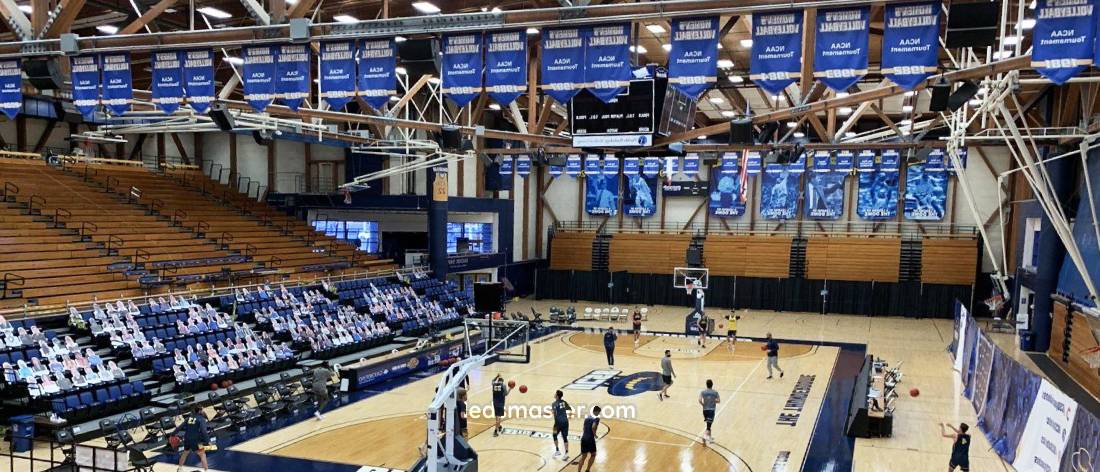
Professional basketball arenas demand the highest lighting performance, meeting strict league and broadcast regulations. Fixtures here exceed 1,500 lux, require flicker-free operation for high-speed cameras, and feature color rendering indexes (CRI) above 90. Systems can include 50 to over 100 broadcast-grade LED fixtures costing upwards of $1,200 to $2,000 per unit, often sourced from specialized manufacturers.
Total installation costs start around $150,000 and can surpass $300,000 or more for large arenas exceeding 20,000 square feet. This figure covers not only the lighting equipment but also state-of-the-art control servers, emergency backup power systems, and customized mounting structures designed to withstand high wind loads and provide exact aiming angles. Installation labor can exceed $40,000 to $60,000, especially where ceiling retrofits or high-elevation lifts are required.
Additional costs in these venues include remote diagnostics technology, color tuning, and integration with broadcast and entertainment lighting networks. Professional-grade installations also budget for ongoing maintenance contracts averaging 5% to 10% of the initial installation cost annually, ensuring system uptime and minimizing event disruptions.
Additional Cost Considerations
Several factors can drive costs beyond the baseline estimates above. For indoor courts with ceilings above 40 feet, structural reinforcements may add $10,000 to $25,000. Outdoor facilities in high-wind or seismic zones often require poles with deeper foundations, which can increase foundation costs from $2,000 to $7,000 per pole. Electrical upgrades such as HVAC recalibrations due to heat load, panel upgrades, or trenching for underground power conduits also contribute variable expenses typically ranging from $5,000 to $15,000.
Labor and permitting fees vary significantly by region. Urban markets with stringent building codes may require licensed contractors and detailed compliance documentation, increasing soft costs by 15% to 25%. For large professional projects, engaging design consultants, lighting engineers, and project managers can add another 10% to 20% of the total budget.
Factors Affecting the Cost of Basketball Court Lighting
The total cost of lighting a basketball court is influenced by several critical factors. These include the lighting technology selected, whether the court is indoor or outdoor, the number of fixtures required, and the overall size and layout of the court. Each of these variables can significantly shift the design, complexity, and final pricing of the lighting system.
LED vs Conventional Lighting
One of the most influential factors in determining cost is the type of lighting technology used. Traditional lighting systems such as metal halide or high-pressure sodium (HPS) tend to offer lower upfront fixture costs, which can initially make them attractive for budget-conscious projects. However, these older technologies come with hidden costs. They typically consume more electricity, emit more heat, and require more frequent maintenance and replacement due to shorter lifespans. In indoor settings, the additional heat output may necessitate HVAC enhancements, further increasing operational expenses.
In contrast, LED lighting systems come with a higher initial investment—often 20% to 40% more costly than their conventional counterparts. Despite this, LEDs offer vastly superior energy efficiency, longer operational life, and reduced maintenance needs. Because they provide higher lumens per watt, fewer LED fixtures may be needed to achieve the same illumination level, partially offsetting the higher upfront costs. Moreover, LED systems often feature programmable dimming, smart control options, and instant-on functionality, which enhance energy savings and simplify day-to-day management. Over time, the total cost of ownership for LED systems tends to be significantly lower, especially in high-use or competition-level environments.
Indoor vs Outdoor Installation
The location of the basketball court—indoor or outdoor—has a direct impact on system design, installation requirements, and overall expense. Outdoor courts generally require fewer fixtures because ambient light can supplement the system, and lower lux levels are often acceptable for recreational or public-use facilities. When existing power infrastructure is already available, outdoor lighting installations can be relatively economical. However, outdoor lighting must contend with weather-related challenges, so fixtures must be IP-rated for water and dust resistance and built to withstand temperature extremes, moisture, and wind loads. Structural elements like poles may require reinforced concrete bases or anchoring systems, especially in hurricane or earthquake-prone regions.
On the other hand, indoor basketball courts present a more controlled but more complex environment. Fixture placement must be calculated to avoid glare, shadows, and visual hotspots. This often requires mounting lights at precise heights and angles using suspended fixtures, catwalk mounts, or roof truss attachments. Electrical work tends to be more involved, particularly when retrofitting from outdated fluorescent or metal halide systems. Additional considerations such as emergency backup systems, smart lighting control panels, and even climate control impacts must be factored into the design. Although LED lighting reduces the heat load compared to conventional fixtures, cumulative output in a sealed environment can still influence HVAC requirements during long events or training sessions.
Number of Fixtures Required
The number of fixtures needed directly affects both material and labor costs. A half-court used for recreational play might require only a handful of fixtures—typically around four to six—depending on the beam angle and mounting height. In contrast, a full-sized indoor court designed for high school or collegiate play often needs 20 to 30 high-powered LED fixtures to meet standards for lux level, uniformity, and safety. As the competition level rises, so does the complexity of the lighting arrangement.
In professional courts, where television broadcast requirements come into play, the fixture count may increase further to provide overlapping light coverage and multiple temperature zones. These installations often incorporate advanced aiming strategies to reduce glare on cameras and ensure consistent lighting from every viewing angle. A greater number of fixtures also means more mounting hardware, electrical cabling, and power capacity upgrades. In facilities with complex control systems, dedicated lighting control rooms may need to be constructed or retrofitted to support remote access, diagnostics, and dimming functions.
The spatial design and aiming of fixtures are critical. Poorly distributed lighting can result in excessive brightness in one area and underlit zones in others, which affects gameplay quality and player performance. Investing in photometric analysis and layout optimization can significantly reduce the number of required fixtures without sacrificing quality, which helps manage both upfront and maintenance costs over the system’s lifespan.
Size of the Basketball Court
Court dimensions are another major cost driver, with lighting needs scaling proportionally. A standard high school basketball court measures approximately 84 feet by 50 feet, while an NBA regulation court extends to 94 feet by 50 feet. Although the increase may seem modest, that additional length can significantly impact how many fixtures are required, how far apart they must be spaced, and how powerful each fixture needs to be to maintain uniformity. The added distance between mount points can increase the number of poles for outdoor courts or the length and complexity of electrical conduit in indoor venues.
In multi-court facilities, such as university gyms or sports complexes, the challenges multiply. These spaces may need to light two or more full-size courts at once, with options for lighting them simultaneously or independently. This often requires zoned lighting systems, smart controls, and sometimes movable dividers or blackout curtains to prevent light spill between games. While shared lighting infrastructure can offer some economies of scale, the planning and commissioning process becomes far more intricate. If not carefully designed, a shared system may lead to inefficiencies, like overlighting or uneven coverage when only a single court is in use.
Planning and Executing a Basketball Court Lighting Installation
Installing or upgrading lighting in a basketball court is a complex process that involves more than selecting bright fixtures. It requires strategic planning, technical assessments, and coordination with multiple stakeholders to deliver a lighting solution that is safe, efficient, and tailored to the level of play. From the early design phase to final commissioning, each stage plays a vital role in achieving optimal results that align with both budget and performance expectations.
Site Assessment and Photometric Design
The foundation of a successful basketball lighting project is a thorough site assessment. This includes mapping out the court dimensions, evaluating existing lighting infrastructure, and identifying any architectural or environmental constraints. For indoor courts, ceiling height, HVAC obstructions, and structural load capacities must be reviewed. For outdoor courts, soil stability, available pole positions, and wind exposure are critical factors.
Photometric analysis is then conducted using advanced lighting design software. This allows lighting designers to create a digital simulation of how different fixtures will distribute light across the court. Key design objectives include achieving uniform lux levels, minimizing glare and shadowing, and meeting the required color rendering index (CRI) and color temperature (CCT) specifications based on the type of gameplay—recreational, competitive, or professional.
This phase also involves compliance with governing standards, such as those issued by the Illuminating Engineering Society (IES), FIBA, NFHS, or NCAA, depending on jurisdiction and competition level.
Electrical Infrastructure and Load Considerations
A frequently underestimated component of the project is the state of the electrical infrastructure. LED systems typically consume less power than conventional fixtures, but they may require dedicated circuits and upgraded control panels, especially if smart lighting features are added. Electricians must calculate total load demand, plan for distribution, and ensure grounding, wiring, and surge protection are all in place and meet local code.
In retrofit scenarios, older facilities may need complete electrical overhauls. This could include installing new conduits, trenching (for outdoor courts), or updating electrical panels to support modern controls. These upgrades can add to both time and cost but are essential for system reliability and code compliance.
Power redundancy is also considered at this stage. Facilities expecting high usage or professional-grade performance may install backup systems, such as uninterruptible power supplies (UPS) or diesel generators, to maintain lighting during power outages.
Mounting Structures and Fixture Installation
Choosing the appropriate mounting approach is a technical decision that affects light distribution, safety, and structural integrity. Indoor courts often require mounting from ceiling trusses, catwalks, or wall brackets, whereas outdoor installations depend on steel poles, typically 20 to 40 feet tall depending on the design.
In new constructions, lighting poles or mounts can be integrated into the initial structure. In existing buildings, retrofitting may demand structural reinforcements or alterations to ceiling layouts. Factors like vibration resistance, pole spacing, bracket stability, and aesthetic integration are taken into account to ensure both visual and physical performance.
High-ceiling gyms or arenas require boom lifts or scaffolding for installation, and in such cases, project scheduling must accommodate for access equipment, trained personnel, and court availability. A misstep in mounting or aiming can lead to suboptimal coverage, glare zones, or frequent maintenance—so professional fixture aiming based on photometric results is essential.
Integration with Controls and Commissioning
Modern LED systems support advanced digital control systems, which provide significant energy savings and user convenience. During this phase, control interfaces, timers, motion detectors, dimming modules, and zoned automation systems are installed and integrated into the facility’s network.
The system is then commissioned, meaning every lighting zone is tested for brightness, distribution, timing accuracy, and control response. Settings are calibrated based on intended use—for example, a school gym may require one brightness setting for practice and another for games. Professional venues might include broadcast lighting presets, color temperature shifts, and even DMX programming for entertainment integration.
Commissioning also includes training facility staff on using the lighting system—how to override schedules, run diagnostics, or adjust scenes as needed. A well-documented control interface simplifies long-term operation and reduces reliance on outside technicians.
Permits, Inspections, and Project Timelines
Before installation begins, local building codes and safety regulations often require permits and pre-approval. This includes compliance with electrical, environmental, and sometimes even historical preservation codes, depending on the site. For outdoor projects, municipal regulations may also require light pollution control plans to avoid excessive glare in residential or wildlife areas.
Inspections must be scheduled at various stages: foundation work, electrical setup, and final system approval. Missing or delaying an inspection can significantly stall the timeline, so coordination with local authorities is essential.
Project timelines vary widely, from 2–4 weeks for simple outdoor upgrades to 3–6 months for full indoor retrofits or new builds. Factors influencing duration include weather, permit wait times, fixture lead times, and staffing availability.
Long-Term Savings with LED Basketball Court Lighting
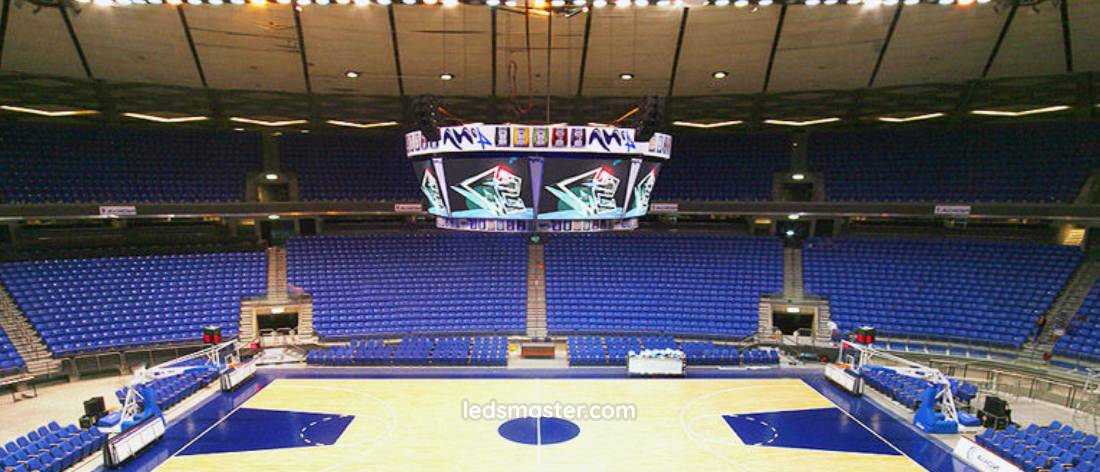
Choosing LED lighting for a basketball court is not just a technical decision—it’s a strategic financial investment. One of the most impactful benefits is the significant reduction in long-term operational costs, especially in facilities with frequent use or extended operating hours. From electricity bills to maintenance labor, LEDs offer savings across multiple areas that add up quickly over the lifespan of the system.
How LED Lighting Reduces Electricity Bills
LED technology excels at energy conversion. While traditional fixtures such as metal halide or high-pressure sodium lamps waste much of their input energy as heat, LEDs convert a higher percentage into visible light. This means facilities can achieve the same or better brightness using far fewer watts. For instance, a 400-watt metal halide fixture can often be replaced by a 150- to 200-watt LED fixture with no loss in lighting performance. This wattage reduction translates directly into lower electricity consumption.
In indoor courts, where lighting may be operated for 8 to 12 hours daily, the energy savings accumulate rapidly. If a facility previously spent $10,000 annually on lighting energy costs, switching to an LED system could reduce that figure by up to 60%, potentially saving $6,000 per year. Over a decade, that equates to tens of thousands of dollars—more than enough to offset the higher upfront costs of the LED system.
Smart Controls That Enhance Efficiency
Modern LED systems are typically compatible with intelligent lighting controls, further amplifying savings. Motion sensors, daylight harvesting technologies, and programmable dimming schedules ensure lights operate only when needed and only at the required intensity. For multi-use gyms and community centers, this capability prevents unnecessary lighting during unoccupied hours, cutting down utility usage without compromising readiness or safety.
Advanced controls also allow for zoned lighting, so specific areas can be illuminated independently. This is especially useful in large sports halls or multi-court gyms, where only one area may be in use at a time. Such flexibility helps optimize energy consumption on a day-to-day basis.
Reduced HVAC Load in Indoor Courts
Another often-overlooked benefit is the reduction in heat output from LED fixtures. Traditional lighting can significantly contribute to the thermal load in an indoor gym, forcing air conditioning systems to work harder to maintain comfortable temperatures. Because LEDs emit far less heat, they lighten the cooling burden, indirectly reducing HVAC-related energy bills. While this may not be the largest line item on a utility bill, in climates where air conditioning is heavily used, the savings can be meaningful over time.
Lower Maintenance and Fixture Replacement Costs
LED fixtures typically last 50,000 to 100,000 hours, far outlasting the 10,000 to 20,000 hours of conventional lighting systems. This durability means far fewer lamp replacements over the years, which in turn results in lower maintenance costs, especially in high-ceiling environments where lighting access requires lifts, scaffolding, or specialized labor.
Each avoided service visit saves not just labor costs, but also the logistical hassle and potential downtime or scheduling disruption, particularly in busy school or tournament settings. In facilities with multiple courts or integrated lighting zones, the cumulative benefit becomes even more pronounced.
Eligibility for Incentives and Rebates
LED upgrades can also qualify for government and utility rebates, making the financial case even more compelling. Many local and national programs offer upfront incentives, energy-efficiency grants, or performance-based rebates for facilities that replace outdated lighting systems with energy-saving alternatives. These incentives can significantly reduce the initial cost burden, shortening the payback period and accelerating the transition to positive cash flow from the project.
For facilities operating on tight budgets—like public schools, municipal rec centers, or nonprofit clubs—these programs may be the key to making a high-quality lighting upgrade financially viable.
A Strong Case for Lifecycle Value
When viewed through the lens of lifecycle value, LED lighting systems stand far above traditional alternatives. Despite the higher initial investment, the combination of lower electricity consumption, reduced HVAC demand, minimal maintenance, and potential rebates delivers long-term financial stability. This is especially valuable in high-traffic basketball courts, where lighting systems are used for games, practices, and events throughout the week.
Conclusion
Choosing LED lighting for basketball courts goes beyond meeting illumination standards—it represents a forward-looking investment in operational efficiency, financial savings, and environmental responsibility. While the initial installation costs of LED systems may be higher than those of traditional technologies, the returns are substantial and measurable over time.
With up to 60% reductions in electricity use, drastically lower maintenance needs, and the ability to integrate smart control systems, LED lighting transforms the economics of sports facility management. The potential for government and utility incentives only strengthens the financial case, offering support that accelerates ROI and lowers the barrier to high-performance upgrades.
Whether you’re managing a high school gym, a university athletics center, or a professional sports arena, investing in LED lighting ensures not only optimal visual performance for players and spectators but also long-term budget relief for operators. As energy prices continue to rise and sustainability becomes more urgent, LED lighting stands out as a smart, scalable, and future-proof solution for any basketball court.