
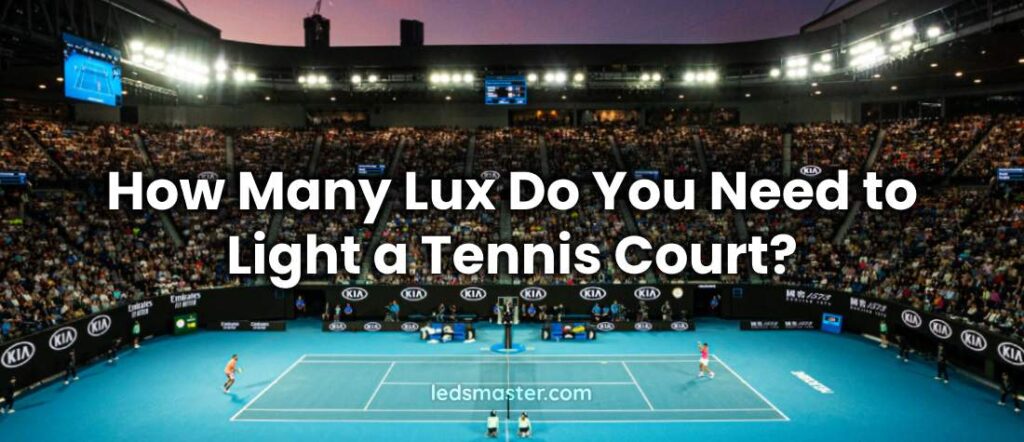
When you step onto a tennis court at night, you probably don’t think much about the lights overhead. Yet, the right lighting can make a huge difference in how the game feels. Too dim, and it’s tough to see the ball; too bright, and you might be squinting or dealing with glare. So, how many lux do you actually need to light a tennis court properly? Let’s dive into the details and break it down in a way that makes sense whether you’re running a small community court or planning a venue for a national competition.
Why Should We Think About Lux, and What Exactly Is It?
Lux is basically a way to measure how much light hits a surface. Imagine standing under a lamp: lux tells you how bright the area around you actually is. It’s different from just measuring the light the lamp gives off (that’s called lumens). On a tennis court, lux measures how well you can see the ball, the lines, and the other player, which directly affects how safely and effectively you can play.
Thinking about lux isn’t just for fancy professional courts. Even for recreational courts, having the right amount of light can help avoid injuries, make playing more enjoyable, and let players judge the speed and spin of the ball more accurately. Too little light, and fast shots can disappear into shadows. Too much, or poorly aimed light, and glare can make it feel like you’re staring into the sun.
Average Lux Levels for Different Tennis Courts
Not all tennis courts are created equal, and the brightness needs vary depending on the type of players and level of competition. Lux levels aren’t just numbers—they determine how clearly you can see the ball, track fast serves, and react to volleys. Let’s break down what different courts typically need.
| Court Type | Class | Typical Lux Range (lx) | Details |
|---|---|---|---|
| Recreational / Community | III | 200–300 | Casual play, slower-paced matches; soft lighting, avoid harsh shadows; good uniformity still matters. |
| School / Regional Competition | II | 300–500 | Faster-paced games, indoor or outdoor; players need to track balls up to 60–80 mph; uniformity becomes more noticeable. |
| Professional / International | I | 1,000–1,500 | High-speed play (over 120 mph), TV broadcast standards; precise uniformity required; indoor courts rely fully on artificial light; outdoor courts may supplement natural light. |
Recreational Courts – Keeping It Comfortable
 For recreational or community courts, like those you’d find at a local park or small club, the lux requirements are relatively low. Most casual courts aim for around 200 to 300 lux, which is enough for players to enjoy evening matches without straining their eyes. At this level, matches are usually slower-paced, so the focus is on visibility for fun and exercise rather than extreme precision.
In terms of classification, these courts usually fall under Class III, which is designed for casual or amateur play. The lighting is soft enough to avoid creating harsh shadows, while still giving players enough clarity to track the ball comfortably. Even with lower lux levels, uniformity still matters, as uneven patches of light can create annoying dark spots near the net or baseline.
School and Regional Competition Courts – Stepping Up the Game
High school, college, or regional competition courts require brighter and more consistent lighting. Here, lux levels usually range from 300 to 500 lux, depending on the size of the court and whether it’s indoor or outdoor. Players at this level are faster and more competitive, so they need to clearly track balls that can reach speeds of 60–80 mph during serves.
These courts are generally classified as Class II, designed for more serious competition. Light uniformity becomes more noticeable at this level because even small shadows or dim areas can affect performance. For example, a baseline area with 500 lux and a net area with only 250 lux could throw off a player’s timing or cause eye strain. Indoor courts at this level need extra attention because they rely entirely on artificial lighting, whereas outdoor courts can sometimes supplement lux with natural light during the day.
Professional and International-Level Courts – Going Big
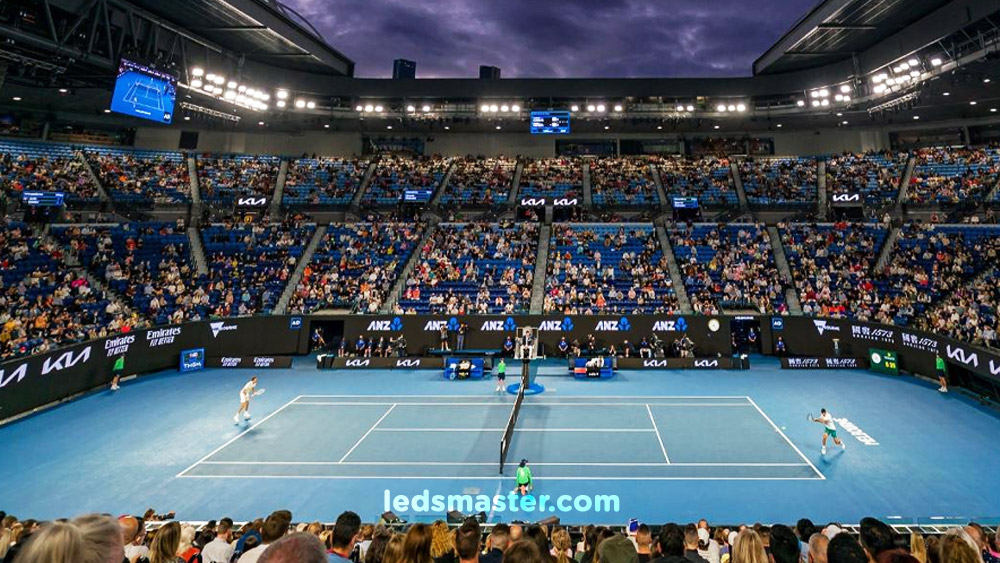
When you step into professional, national, or international-level courts, lux requirements jump significantly. Most Class I courts, which are used for professional tournaments or broadcast matches, aim for 1,000 lux or more, with some events going up to 1,500 lux to meet TV broadcast standards. At these levels, the ball can travel over 120 mph, and players need flawless visibility across the entire court surface. Even minor variations in brightness or glare can disrupt high-speed play.
Indoor professional courts require careful lux planning because every corner depends on artificial lighting. Fixtures are often placed on 10–12 meter poles and spaced to ensure uniformity, minimizing shadows and glare. Outdoor professional courts, on the other hand, have to account for natural light changes, but evening matches still require consistent lux across the court, sometimes needing temporary adjustments with floodlights.
Why Uniformity and Lux Classes Matter
One key factor in all courts, but especially for Class I and II, is uniformity. Experts often aim for a uniformity ratio of 0.5 to 0.7, meaning the dimmest area should have at least 50–70% of the brightness of the brightest area. This is crucial for professional-level play because even a small dark patch can make it hard to judge the ball’s trajectory or spin.
Another aspect is glare, which can be a huge problem if fixtures are aimed poorly. For recreational courts (Class III), this isn’t usually a huge issue, but for Class I courts, glare reduction is a big part of the lighting design. The angle, height, and type of fixture all play a role in keeping players comfortable while maintaining high lux levels.
Indoor vs Outdoor Considerations
Indoor courts almost always need higher lux because they don’t have natural light to rely on. For example, a Class II indoor court might aim for 400–500 lux consistently across the surface, whereas a similar outdoor court could function comfortably with slightly lower levels at dusk because some sunlight still helps illuminate the court.
Outdoor professional courts still have to consider lux carefully, especially for evening or night tournaments. Fixtures are usually designed with beam angles and spacing that allow 1,200–1,500 lux across the entire playing area without causing glare for players or interfering with cameras.
How to Measure Lux Levels on a Tennis Court

Measuring lux on a tennis court is easier than most people think, but it does require a little planning and the right tools. After all, lux isn’t just about how bright the lights are, it’s about how much usable light actually reaches the playing surface. The way you measure it can make a big difference in understanding whether your court lighting is up to standard.
Choosing the Right Tool
The go-to tool for measuring tennis court lighting is a lux meter, which measures the intensity of light in lux—the unit that tells you how bright a surface actually is. These devices are accurate and give instant readings. For serious planning, especially for Class I or Class II courts used for competitions, a professional lux meter is highly recommended. They can detect even small differences in light levels across the court.
Some recreational courts get by with smartphone lux meter apps. While these aren’t as precise as professional devices, they can give a rough estimate. For example, if you’re aiming for around 300 lux for a Class III recreational court, a phone app can confirm you’re in the ballpark. But for tournament courts with 1,000 to 1,500 lux requirements, professional measurement is the safer way to go.
Where to Measure on the Court
A tennis court is a large area, usually 23.77 meters long by 10.97 meters wide for doubles, so one measurement won’t cut it. The most common approach is to take readings at multiple points: near the baseline, the service line, the center, and close to the net. This way, you get a sense of how uniform the lighting is across the entire surface.
For example, if your lux meter reads 500 lux at the baseline but only 250 lux near the net, that’s a 0.5 uniformity ratio, which is the minimum many lighting designers recommend for Class II courts. Anything lower than 0.5 can feel uneven, making it hard for players to track the ball, especially during fast volleys.
Height of Measurement
Where you place your meter matters. The ideal height is roughly 1 meter above the court, which simulates the average eye level of a standing player. Measuring at this height gives a realistic view of how much light the players actually experience. Measuring too high or too low can give misleading results, either overestimating or underestimating the usable light.
For broadcast or professional matches, some experts even take multiple readings at different heights—from the court surface up to 1.8 meters—to account for varying player stances and ball trajectory. This is particularly important when aiming for Class I lighting levels of 1,000–1,500 lux.
Timing and Environmental Considerations
The time of day matters, especially for outdoor courts. Natural light can skew lux readings, so measurements for night lighting should ideally be taken after sunset or in full darkness. For indoor courts, make sure other light sources—like windows or overhead lamps—aren’t interfering with the readings.
Temperature and weather can also slightly affect lux levels. Humidity or foggy conditions outdoors might reduce perceived brightness, while dust or dirt on indoor fixtures can lower actual lux by 10–20% over time. Keeping these factors in mind ensures your measurements reflect real playing conditions.
Checking Uniformity Across the Court
Average lux is important, but uniformity is just as crucial. Uneven lighting can create frustrating shadows, especially around the net or sidelines, which can interfere with player performance. A well-lit Class I court should aim for a uniformity ratio of 0.7 or higher, meaning the dimmest areas have at least 70% of the brightness of the brightest spots.
During measurement, walk around with the lux meter and note areas that fall significantly below the target. Many facilities use a grid system, dividing the court into squares of 3–5 meters and measuring lux at each intersection. This gives a detailed picture of which areas may need fixture adjustments, tilting, or additional lights.
Making Sense of the Numbers
Once you’ve measured, compare your readings to your target lux levels. Recreational courts (Class III) usually aim for 200–300 lux, high school or regional courts (Class II) target 300–500 lux, and professional courts (Class I) reach 1,000–1,500 lux.
For instance, if your Class II indoor court averages 400 lux but has spots dipping below 250 lux, players might struggle during volleys at the net. At this point, adjusting fixture angles or adding extra floodlights could be necessary to balance the lux levels and improve uniformity.
Tips for Proper Tennis Court Lighting Levels
Getting the right lux numbers on paper is just the first step. Making the lights actually work well on a tennis court involves several practical considerations. Small adjustments in how lights are installed and aimed can make a huge difference in how players experience the game.
Prioritize Uniformity Across the Court
Even if the average lux meets your target, uneven lighting can ruin the playing experience. Shadows near the net or baseline can make fast volleys or serves hard to track. Lighting designers often aim for a uniformity ratio of 0.5 to 0.7, meaning the dimmest area has at least 50–70% of the brightness of the brightest spot.
For example, a Class II high school court might average 400 lux, but if certain areas only have 200 lux, players may struggle to judge the ball properly during fast rallies. Class I professional courts aim even higher, targeting uniformity ratios closer to 0.8 to 0.9, so that every corner of the court feels equally lit.
Reduce Glare for Player Comfort
Glare is a common problem, especially with high-powered fixtures. Glare occurs when bright light hits a player’s eyes directly, making it hard to track high balls or overhead shots. Proper fixture placement and angling are key. Lights should be mounted in a way that illuminates the court surface evenly while minimizing direct light in players’ line of sight.
This is particularly crucial near the baseline and net, where players frequently look upward for serves and lobs. Even a small angle adjustment of a few degrees can reduce eye strain dramatically and improve reaction times.
Choose the Right Fixture Type
Modern tennis courts are increasingly using LED fixtures instead of older metal-halide or fluorescent lights. LEDs are energy-efficient, brighter, and produce less heat, making them ideal for indoor and outdoor courts alike. They also offer more precise beam control, which helps maintain uniformity and reduces glare.
For instance, a 600-watt metal-halide fixture might illuminate a section of the court unevenly, while a 300-watt LED fixture with proper optics can achieve the same or better lux levels with smoother light distribution.
Pole Height and Spacing
The height and spacing of light poles do more than affect aesthetics—they directly influence light coverage and uniformity. Professional courts often use poles 10 to 12 meters high, which spreads light over a larger area and reduces the number of fixtures needed.
Shorter poles might require more fixtures to avoid dark spots, which increases costs and can lead to overlapping beams that create glare. Fixture spacing also depends on the type of light and beam angle. For example, a wide-beam LED fixture might need 15–18 meters between poles, whereas a narrower beam might require spacing of only 10–12 meters to cover the same area evenly.
Consider Color Temperature
Color temperature can subtly affect how players perceive the ball and the court. Warmer lights around 3,000K give a softer feel but can make fast-moving balls slightly harder to track, especially during night matches. Cooler lights around 5,000K mimic daylight, making colors pop and helping players judge speed, spin, and trajectory more accurately.
Most competitive courts, including Class I and Class II courts, use cooler temperatures for night play. Recreational courts (Class III) can sometimes use warmer lighting, which feels more comfortable for casual play while still providing sufficient visibility.
Balance Brightness and Energy Use
High lux levels are great, but more isn’t always better. Excessive brightness can cause glare, uneven contrast, and energy waste. The key is to hit the target lux for your court class while optimizing uniformity, fixture type, and positioning. Proper planning ensures players get clear visibility without wasting electricity or creating uncomfortable lighting conditions.
Test and Adjust
Finally, once your lights are installed, it’s worth doing trial games at night. Take lux readings at multiple points, check for shadows or glare, and watch how the ball looks from different positions on the court. Small adjustments in pole angles or fixture tilt can improve uniformity and reduce glare dramatically, especially on Class I courts where every lux counts.
Seeing the Game Clearly
Lighting a tennis court is about more than just numbers on a meter. It’s about making sure every shot, every volley, and every serve is visible and comfortable to play under. From recreational parks to international tournaments, understanding and controlling lux levels makes a real difference in how the game feels.
Even casual players notice when a court is poorly lit. Shadows, glare, and uneven brightness can slow reaction times and make matches less fun. Proper lux levels improve visibility, help prevent eye strain, and make the game feel smoother. It’s the kind of subtle difference that most players don’t talk about—but they definitely feel it.
Whether you’re upgrading an old court or building a new one, taking a few moments to plan the right lighting setup pays off in years of better games and happier players. A well-lit court doesn’t just let the game go on after sunset—it makes every point easier to see, more enjoyable, and fair for everyone.