

| Area / Application | Recommended Lux Level | Notes |
|---|---|---|
| General Outdoor Work Areas (e.g., decks, pipe racks) | 100 – 300 lux | Supports safe navigation and equipment handling |
| Drilling Decks | ~200 lux | Balances visibility and energy consumption for heavy machinery |
| Pipe Racks and Storage Areas | 100 – 150 lux | Lower activity zones requiring hazard visibility |
| Loading and Unloading Zones | 250 – 300 lux | Supports safe heavy load movement and precision |
| Helidecks | 200 – 400 lux | High uniformity needed for pilot visibility during landings |
| Control Rooms and Inspection Areas | 500 – 1000 lux | Supports detailed work and instrument reading |
| Task Lighting on Work Surfaces | 700 – 1200 lux | Provides focused illumination for detailed tasks |
| Emergency Lighting and Evacuation Routes | 10 – 50 lux | Ensures visibility during power outages and emergencies |
Lux levels on an oil rig vary considerably based on the location and the specific tasks carried out within each area. The environment ranges from expansive outdoor decks and helipads to highly sensitive control rooms and confined maintenance spaces. Each of these zones demands different illumination intensities to support safe operations, task accuracy, and overall visual comfort.
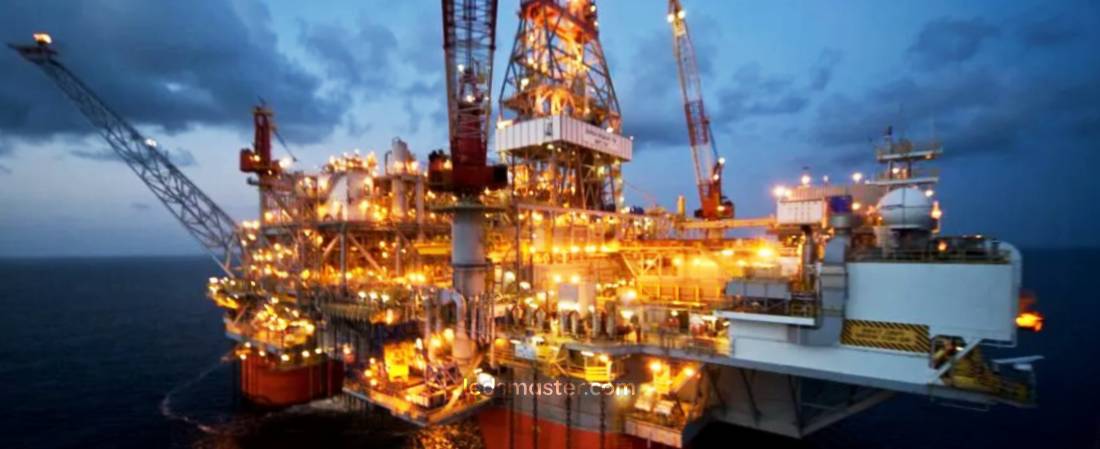
Outdoor work areas on oil rigs, including drilling decks, pipe racks, loading zones, and walkways, demand carefully calibrated illumination to support operational safety and efficiency. These areas typically require illumination levels between 100 and 300 lux. Such lighting intensities offer sufficient brightness to enable workers to navigate safely, operate heavy machinery, and perform routine inspections without excessive shadows that can hide hazards like cables, uneven surfaces, or small equipment parts.
More specifically, drilling decks, which house large and complex machinery operating around the clock, generally target an illumination level close to 200 lux. This value provides a practical balance, offering enough light to maintain visibility during both day and night operations while controlling energy consumption. Maintaining around 200 lux helps workers quickly identify equipment status and potential safety issues, such as oil spills or leaks, which could be masked by poor lighting.
Pipe racks and storage areas usually maintain lux levels in the lower end of this range, near 100 to 150 lux, since these zones are less active but still require enough light to prevent accidents during material handling and transportation. Loading and unloading areas, on the other hand, often target lux levels between 250 and 300 lux to support the safe movement of heavy loads and to facilitate precise equipment placement by crane operators and rig workers.
In addition to intensity, the uniformity of lighting in these outdoor zones is vital. Uniformity ratios around 0.4 to 0.6 are common, which means the minimum illumination should be at least 40-60% of the average lux level to prevent pockets of darkness. This helps ensure that workers do not encounter sudden transitions from well-lit to poorly lit areas that could contribute to slips, trips, or missteps.
Helidecks require a distinct and more stringent lighting approach due to their critical role in helicopter landings and takeoffs. International aviation and offshore industry standards recommend maintaining lux levels between 200 and 400 lux on helideck surfaces. This higher intensity supports pilot visibility under various weather conditions, including fog, rain, or nighttime operations.
In addition to lux levels, helidecks demand very high uniformity ratios—often exceeding 0.8—to eliminate glare and dark spots that could impair depth perception and spatial orientation. Specialized floodlighting with adjustable beam angles and anti-glare shielding is employed to meet these requirements. Furthermore, backup lighting systems with automatic activation ensure continuous illumination during power failures, which is critical for emergency landings.
Maintenance of these lighting systems involves regular cleaning to remove salt deposits and corrosion from sea spray, which can reduce light output over time. The use of corrosion-resistant fixtures with robust IP ratings, such as IP66 or higher, helps sustain consistent lux levels despite harsh offshore conditions.
Overall, understanding the specific lux requirements for each outdoor work zone enables tailored lighting designs that enhance safety and operational efficiency while managing energy consumption effectively.
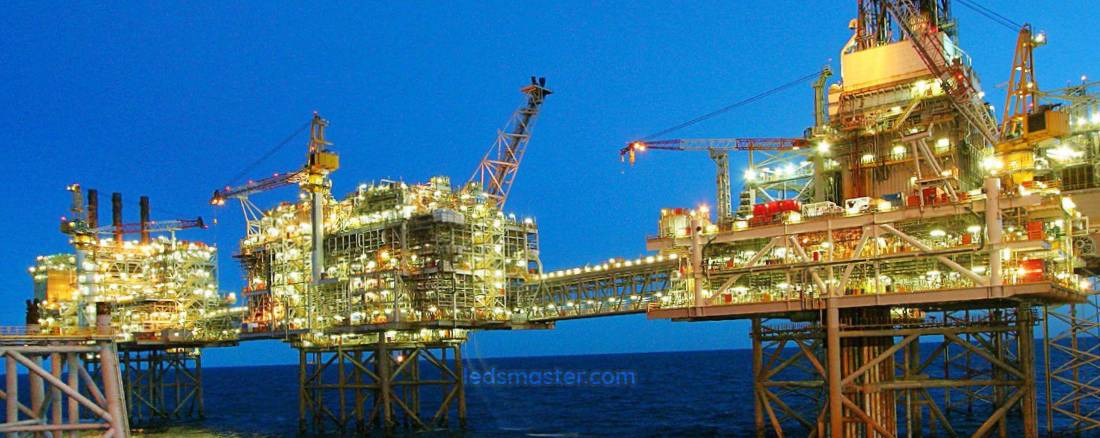
Control rooms, instrument panels, and inspection zones demand more intense lighting compared to general outdoor areas. These spaces often require illumination levels between 500 and 1000 lux. Higher lux levels assist operators and technicians in reading instruments accurately, performing detailed inspections, and making precise adjustments.
For example, control panels with numerous small indicators or switches benefit from focused task lighting combined with uniform ambient illumination. Laboratories on the rig also fall into this category, requiring clean, bright, and consistent lighting to support quality control and sample analysis tasks.
While ambient lighting establishes the overall illumination level in a space, task lighting is designed to provide focused, high-intensity light directly on specific work areas or instruments where precision is required. On oil rigs, ambient lighting creates a safe and navigable environment by illuminating larger zones such as control rooms, walkways, or decks with moderate lux levels. However, ambient light alone often cannot meet the visual demands of detailed inspections, instrument readings, or maintenance work that requires sharp clarity and contrast.
Task lighting addresses this need by delivering concentrated beams or localized light sources that increase the illuminance precisely where it is most needed. These fixtures typically provide lux values ranging from 700 up to 1200 lux directly on the task surface. Such high-intensity illumination supports activities like reading gauges, assembling components, or performing quality control checks, particularly during night shifts or in confined spaces without access to natural daylight.
The design of task lighting must also consider factors such as glare reduction, shadow control, and adjustability. Fixtures are often equipped with shields, diffusers, or flexible arms to enable workers to position the light optimally without causing discomfort or visual interference. This adaptability is especially valuable in dynamic environments on oil rigs where workers may need to shift their focus quickly across different instruments or equipment.
By combining ambient and task lighting thoughtfully, oil rigs can achieve both broad visibility and pinpoint precision, enhancing safety, reducing eye fatigue, and increasing operational efficiency across various work zones. The layered lighting approach ensures that personnel can maintain optimal visual performance regardless of external conditions or the complexity of their tasks.
Emergency lighting plays a vital role in providing visual guidance during power outages or hazardous situations such as fire or gas leaks. These lighting systems typically maintain lux levels between 10 and 50 lux along evacuation paths, stairways, muster points, and lifeboat stations. While these levels are lower than operational lighting, they must be sufficiently bright to prevent panic and ensure smooth evacuation.
Emergency lighting circuits on oil rigs rely heavily on dedicated backup power sources to ensure continuous operation during power failures. These backups commonly include battery systems, uninterruptible power supplies (UPS), or diesel generators specifically designed to activate automatically in the event of a main power loss. The ability to maintain consistent illumination is vital for safe evacuation, hazard identification, and emergency response activities when normal power is unavailable. Regular maintenance and rigorous testing protocols are established to verify that backup systems remain fully functional and meet industry safety standards. These tests help detect potential failures in batteries, wiring, or generator systems well before an actual emergency occurs, thereby reinforcing operational readiness at all times.
Beyond the general illumination provided by emergency lighting, specialized signage and marker lighting play a pivotal role in guiding personnel safely during emergencies or low-visibility conditions. Exit signs, pathway markers, muster point indicators, and hazard warnings are equipped with either dedicated light sources or photoluminescent materials that glow even when power is lost. These features are designed to remain visible at low lux levels, often as low as a few lux, providing crucial visual cues that help workers navigate escape routes or identify dangerous areas. By supplementing ambient emergency lighting, signage and marker lighting enhance situational awareness, reduce confusion, and support efficient evacuation, particularly in the complex and often cramped environments found on offshore oil rigs.
Lux levels should be periodically measured on-site using calibrated light meters to verify that design targets are met and maintained. Variations can occur due to fixture aging, dirt accumulation, or changes in the rig layout. Adjustments such as cleaning, realignment, or fixture replacement help preserve consistent lighting performance.
Computer modeling during the design phase allows engineers to simulate lighting layouts and predict lux distributions, ensuring that both intensity and uniformity targets are achievable. This modeling helps optimize fixture placement, types, and quantities, resulting in efficient and effective lighting solutions tailored to the rig’s operational requirements.

Light uniformity refers to the consistency of illumination across a given surface or workspace. Maintaining even light distribution is fundamental on oil rigs because it minimizes shadows, reduces visual strain, and enhances the ability of workers to detect potential hazards. Uneven lighting creates areas of darkness and brightness that can obscure obstacles, tools, or equipment, leading to increased risk of accidents and inefficiencies in task execution. The uniformity ratio, defined as the ratio between the minimum and average illuminance, serves as a key metric to evaluate lighting quality. Ideally, this ratio should approach one to avoid sharp contrasts that impair visibility.
On expansive outdoor areas such as platforms, decks, and walkways, uniformity ratios between 0.4 and 0.6 are generally considered suitable. This level of uniformity ensures that workers can safely navigate around equipment and structural elements while clearly identifying any irregularities in the walking surface, such as steps or cables.
Shadows and uneven illumination across outdoor zones can significantly increase the risk of accidents on oil rigs. When certain areas are poorly lit or unevenly illuminated, trip hazards such as loose cables, uneven surfaces, or debris can become concealed, making it difficult for workers to detect and avoid these dangers. This risk is heightened during night operations or in poor weather conditions such as fog, rain, or heavy seas, where natural visibility is already compromised.
Disorientation caused by inconsistent lighting can also affect workers’ spatial awareness, leading to missteps or collisions with equipment. These safety concerns contribute to a large proportion of incidents on offshore platforms, including slips, trips, and falls, which can result in serious injury or operational delays. By maintaining proper light uniformity, these risks are minimized, providing a safer environment where personnel can move confidently and perform tasks without hesitation. Furthermore, well-distributed lighting supports emergency response activities by ensuring clear visibility in all areas during urgent situations.
In addition to preventing physical accidents, consistent illumination helps reduce mental fatigue. Workers exposed to frequent changes in lighting intensity may experience eye strain or difficulty focusing, which can degrade their attention and reaction times. Proper uniformity therefore contributes not only to immediate physical safety but also to the sustained well-being and effectiveness of personnel throughout their shifts.
Achieving optimal light uniformity on an oil rig requires a combination of thoughtful fixture placement, selection, and beam control. Lighting designers typically employ a mix of high-mounted floodlights to cover broad outdoor areas along with lower-level fixtures that fill in shadows and reduce dark spots. The overlapping light cones from these fixtures blend to create a more even illumination pattern across decks, walkways, and work zones.
Choosing fixtures with wide beam angles can help spread light over larger areas, reducing the likelihood of harsh contrasts between bright and dark zones. Adjustable optics and directional controls enable fine-tuning of beam distribution, ensuring that light is directed precisely where it is needed without unnecessary spill or glare. This flexibility is particularly useful in irregularly shaped spaces or areas with structural obstructions that might otherwise cause uneven lighting.
In some cases, designers incorporate reflectors and diffusers to soften light transitions and improve coverage uniformity. Reflective surfaces on decks or equipment can also be considered when planning fixture positions, as these can help bounce light into shaded areas. Finally, modern lighting control systems allow for dynamic adjustment of lighting levels, enabling uniformity to be maintained despite changing environmental conditions or operational requirements.
Periodic assessment and maintenance further support uniformity by ensuring fixtures remain clean, properly aligned, and functioning as intended. These combined design and management strategies form the foundation for reliable, safe, and visually comfortable illumination across all outdoor oil rig work areas.
Enclosed environments on oil rigs, including control rooms, laboratories, and equipment monitoring stations, require a more stringent approach to light uniformity. These spaces typically demand uniformity ratios exceeding 0.8 to ensure that illumination is consistent across all surfaces without noticeable variations or shadows. Such high uniformity helps create a stable visual environment where operators can focus on intricate instruments and displays without distractions caused by fluctuating light levels.
Even minor inconsistencies in lighting within these areas can lead to eye strain, visual fatigue, and discomfort. This, in turn, may reduce operator accuracy, slow reaction times, and increase the likelihood of errors during critical decision-making processes. Since control rooms are often the nerve centers of rig operations—monitoring safety systems, machinery, and environmental conditions—maintaining precise and uniform lighting supports both safety and operational effectiveness.
Additionally, enclosed spaces tend to have limited natural light sources, making the artificial lighting quality paramount. Careful design and placement of fixtures are necessary to avoid glare or hotspots that might interfere with screen visibility or cause reflections on glass surfaces. By achieving and maintaining high uniformity standards, these environments promote optimal working conditions, reducing fatigue and supporting sustained attention over long shifts.
Consistent and well-distributed lighting plays a vital role in reducing eye fatigue and headaches, especially for personnel who spend extended periods monitoring complex control systems or conducting detailed inspections. Poorly designed lighting with flicker, glare, or uneven brightness can cause strain on the eyes, leading to discomfort, reduced alertness, and decreased productivity. By maintaining a stable and uniform lighting environment, workers are able to sustain concentration for longer durations, which helps minimize errors and supports overall operational safety. Comfortable lighting also contributes positively to mental well-being, reducing stress and promoting a healthier work atmosphere in these demanding offshore environments.
Achieving high uniformity in enclosed workspaces often requires a strategic combination of ambient lighting and task-specific luminaires. Ambient lighting provides general illumination to create a balanced base level of light, while task lighting offers focused brightness tailored to particular activities, such as instrument reading or equipment maintenance. Careful positioning of these fixtures is crucial to prevent shadows cast by equipment, instruments, or personnel from obstructing important visual tasks. When integrated thoughtfully, this layering of light enhances visibility and precision without causing glare or visual discomfort, thereby enabling workers to perform their duties efficiently and safely.
The effectiveness of uniform lighting can diminish over time due to factors such as dust accumulation, fixture aging, and mechanical shifts caused by vibrations or environmental conditions typical on oil rigs. Regular cleaning of fixtures and lenses is necessary to prevent the buildup of dirt and salt deposits, which can significantly reduce light output and alter distribution patterns. Additionally, periodic inspection and realignment of fixtures ensure that lighting remains properly aimed and balanced. Preventive maintenance routines not only preserve uniformity but also extend the operational life of lighting systems, contributing to consistent performance and reducing the need for costly replacements or emergency repairs.
Effective lighting design is incomplete without thorough measurement of uniformity. Using calibrated lux meters, lighting professionals assess minimum, maximum, and average illuminance levels to calculate uniformity ratios. This data helps confirm that installations meet design criteria and identify areas needing adjustment.
Over time, a variety of factors can cause changes in lighting uniformity on an oil rig. Environmental conditions such as salt spray, dust, and humidity may accumulate on fixtures, reducing light output and altering distribution patterns. Mechanical vibrations and shifting structures can cause fixtures to move slightly out of alignment, creating uneven illumination. Additionally, the natural aging of lamps and electronic components results in decreased brightness and changes in color temperature, all of which impact the overall lighting quality. To address these issues, scheduled lighting audits are conducted regularly to assess the current state of illumination across key work areas. These audits involve detailed measurements of lux levels and uniformity ratios using calibrated instruments, along with visual inspections to identify any physical damage or dirt accumulation. By systematically evaluating lighting performance, operators can identify areas where conditions have deteriorated, ensuring that safety standards are consistently met and working environments remain optimal for personnel.
Following the findings from periodic audits, targeted adjustments and recalibrations are often necessary to restore uniformity and maintain high lighting quality. Simple corrective actions such as repositioning or realigning fixtures can eliminate dark spots and improve coverage without requiring major alterations to the lighting system. In some cases, lamps or LED modules that have dimmed significantly due to age are replaced to bring light levels back to design specifications. Cleaning lenses, reflectors, and fixture housings is another effective measure to recover lost brightness caused by dirt, salt deposits, or corrosion. These maintenance activities not only enhance illumination uniformity but also help extend the service life of fixtures, reducing overall operational costs. When performed regularly and proactively, such adjustments ensure that the lighting environment on the rig remains safe, comfortable, and efficient throughout the operational lifespan of the installation.
| Area / Parameter | Typical Number of Fixtures | Fixture Details / Notes |
|---|---|---|
| Large Drilling Platforms (Deck Area ~10,000 m²) | 100 – 150 floodlights | High-output fixtures delivering 150–200 lux; mounted 10-25 m high; 30,000 – 70,000 lumens each |
| Smaller Support Platforms / Helidecks | Fewer than 20 fixtures | Higher lux levels with tighter uniformity; specialized floodlights or spotlights |
| Control Rooms and Enclosed Spaces | 50 – 100 fixtures | Task and ambient lighting delivering 700–1200 lux on work surfaces; mounted at accessible heights |
| Fixture Spacing on Decks | Typically every 15 to 20 meters | Depends on beam angle and mounting height; optimized via photometric simulation |
| Backup / Redundant Fixtures | 5% to 10% additional fixtures | Installed to cover maintenance downtime and fixture failures |
The total number of lighting fixtures required on an oil rig is influenced by various interrelated factors, such as the platform’s size, the layout and complexity of work areas, mounting heights of fixtures, and the desired lux levels to meet operational needs. Unlike simple lighting setups, oil rigs demand a precise balance between adequate illumination and practical constraints including energy consumption, maintenance accessibility, and safety compliance.
The physical size of an offshore rig can span thousands of square meters, encompassing large open decks, narrow walkways, and multiple enclosed compartments. Larger areas naturally require more fixtures to maintain consistent lighting. For example, a drilling platform with a working surface exceeding 10,000 square meters may need upwards of 100 to 150 high-output floodlights to achieve typical deck illumination levels of 150 to 200 lux. In contrast, smaller support platforms or helidecks might require fewer than 20 fixtures, but with higher lux targets and tighter uniformity requirements.
Mounting height also impacts fixture count and distribution. High mast poles, often positioned at heights between 10 to 25 meters, allow floodlights to cover wider areas, reducing the total number of fixtures needed. However, as mounting height increases, light intensity at the surface decreases due to distance and beam spread, necessitating fixtures with higher lumen output or additional units to prevent dim areas. Designers may choose fixtures emitting between 30,000 and 70,000 lumens per unit for these high mounts.
Specialized zones such as control rooms, instrument panels, or emergency exits require smaller, focused fixtures with higher lux targets but lower coverage areas. These areas might have dozens of task lights or downlights delivering between 700 and 1200 lux on work surfaces. Overall fixture counts for enclosed areas typically range from 50 to 100, depending on the size and number of rooms.
Lighting designers utilize photometric studies and computer-aided design (CAD) simulations to precisely calculate the number and placement of fixtures needed. These simulations consider critical parameters including fixture lumen output, beam angle, mounting height, and spacing between units. By modeling light distribution patterns, designers can predict illuminance levels and uniformity ratios across the rig’s surfaces, allowing optimization of fixture quantity and types before installation.
For example, a rig’s main deck may be modeled using simulation software that tests different fixture layouts—spacing floodlights every 15 meters versus every 20 meters, or comparing narrow versus wide beam optics. These studies help determine the minimum fixture count necessary to meet lux and uniformity requirements, preventing overdesign that leads to wasted energy and costs.
Simulations also assist in layering lighting types effectively. Ambient lighting provides broad, low-to-medium intensity coverage, while task lighting supplements specific zones with focused, high-intensity illumination. Emergency lighting is incorporated as an additional layer, with dedicated circuits and backup power. This multi-layer approach requires coordinated fixture quantities tailored to each function.
Beyond initial design and installation, the number of fixtures is influenced by practical maintenance needs. Fixtures should be positioned to allow safe and convenient access for inspection, cleaning, and replacement. On offshore rigs, where weather and operational schedules can limit maintenance windows, designing for ease of upkeep reduces downtime and costs.
For example, lighting on high mast poles is often grouped or modularized so that individual fixtures can be replaced using specialized lifts or cranes without shutting down entire areas. Fixtures installed in enclosed rooms may be mounted at reachable heights or in clusters near access points. Balancing fixture quantity with accessibility ensures consistent lighting performance throughout the rig’s operational life.
In some cases, redundancy is built into lighting layouts by adding a small percentage (5-10%) of extra fixtures to cover potential failures or maintenance downtime. This reserve capacity helps maintain safety and visibility without compromising operations.

| Parameter | Typical Figures / Values | Notes |
|---|---|---|
| High Voltage Distribution | 480V or higher (commonly 480V three-phase) | Reduces power losses over long cable runs; enables lighter cabling |
| Step-Down Voltages for Fixtures | 120V, 277V typical | Voltage adapted for specific fixtures via transformers |
| LED Fixture Power Ratings | 100W (task lights) to 400W+ (high-output floodlights) | Wide range depending on application and light output needed |
| Example Power Consumption | ~30 kW for 100 LED floodlights at 300W each | Equivalent metal halide system could exceed 60 kW for same illumination |
| LED Lifespan | 50,000+ hours | Reduces maintenance and replacement frequency |
Power and voltage management are fundamental aspects of designing lighting systems on oil rigs, where reliable electricity must be provided consistently under challenging environmental conditions. Offshore platforms operate with specialized power grids that not only supply lighting but also support a myriad of critical systems such as drilling equipment, communication networks, safety devices, and HVAC units. The lighting system’s overall power requirements depend heavily on the total wattage of all installed fixtures and any auxiliary control devices like dimmers, sensors, or automation panels.
Because oil rigs often span large areas with extensive cabling, maintaining energy efficiency and minimizing power losses during transmission is a priority. To address this, high voltage distribution systems—typically at or above 480 volts (V)—are employed for lighting circuits. Using such voltages reduces current flow, which in turn decreases resistive losses over long cable runs and allows for lighter, more compact cabling infrastructure. Step-down transformers are strategically placed to reduce voltage to levels compatible with individual lighting fixtures or groups, ensuring safe and efficient operation across various lighting zones.
High voltage distribution, commonly operating at 480V three-phase or sometimes even higher voltages on larger rigs, is preferred because it balances the need for efficient power transmission with manageable safety considerations. This distribution method limits energy losses during transmission, which can otherwise be significant due to the long distances between the power source and remote lighting fixtures.
Transformers placed near lighting clusters step down the voltage to standard operating levels for LED drivers or other lamp types, such as 120V or 277V for lighting loads. This segmentation also allows for easier isolation and maintenance of lighting zones without affecting the entire rig’s power system.
In addition to energy savings, high voltage distribution reduces the bulk and weight of cabling systems—an important consideration for offshore platforms where every kilogram matters for structural integrity and installation costs.
Energy efficiency is a major driver behind power considerations for offshore lighting systems. LED lighting technology has become the industry standard due to its superior energy performance compared to traditional sources like metal halide, high-pressure sodium, or fluorescent lamps. LEDs consume roughly 40-60% less power than comparable traditional lamps while providing equal or better light output.
The typical power rating for LED fixtures used on oil rigs ranges from 100 watts for small task lights to over 400 watts for high-output floodlights. A drilling deck outfitted with 100 high-output LED floodlights rated at 300 watts each would require approximately 30 kilowatts (kW) of lighting power, whereas an equivalent metal halide system could demand more than 60 kW for the same illumination level.
Beyond power savings, LEDs offer longer lifespans—often exceeding 50,000 hours—and generate less heat, reducing cooling loads in enclosed spaces. These attributes not only cut operational costs but also minimize maintenance requirements, which is highly advantageous given the difficulty of servicing fixtures offshore.
Modern offshore lighting installations increasingly incorporate energy management and control systems that allow operators to optimize power consumption dynamically. Automated dimming controls, motion sensors, and programmable schedules enable lighting to adjust based on occupancy, daylight availability, or operational status, further reducing unnecessary energy use.
Remote monitoring systems provide real-time data on lighting status, power consumption, and fixture health. These capabilities allow maintenance teams to detect failures or inefficiencies early and prioritize repairs or replacements, avoiding extended downtimes.
Power quality is also closely monitored to prevent damage to sensitive LED drivers or control electronics caused by voltage fluctuations, harmonics, or transient surges. Surge protection devices and power conditioners are integrated into the electrical distribution system to safeguard equipment.
Effective power and voltage management on oil rigs not only ensures reliable and safe lighting but also contributes significantly to reducing operational costs, enhancing system longevity, and improving environmental sustainability through energy savings.
Color temperature is a fundamental aspect of lighting design on oil rigs, directly affecting worker visibility, alertness, and overall comfort. Expressed in Kelvins (K), color temperature measures the color characteristics of light emitted by fixtures, spanning from warm, yellowish tones at lower temperatures to cool, bluish tones at higher temperatures. The selection of appropriate color temperature values for different rig areas is crucial for optimizing performance and well-being in these demanding offshore environments.
For most operational zones on an oil rig—including drilling decks, walkways, and general workspaces—a color temperature range of 4000K to 5000K is typically preferred. This neutral white light balances visual comfort with clarity, improving contrast and reducing eye strain during routine activities. By enhancing visibility without introducing harsh glare, this range supports prolonged focus and reduces the risk of errors or accidents.
Neutral white lighting in the 4000K to 5000K range aids in distinguishing colors and textures, which is essential for equipment inspections, maintenance, and operational monitoring. It enhances the perception of detail without overwhelming the eyes, creating an environment where workers can efficiently perform both coarse and fine tasks.
Using lighting with this moderate color temperature helps minimize eye fatigue compared to cooler, bluish light sources. It maintains a balance between brightness and comfort, which is particularly important during long shifts where workers are exposed to artificial lighting continuously.
In specialized areas such as control rooms, laboratories, and inspection stations, cooler color temperatures closer to 6000K are often employed. This cool white light enhances visual acuity and sharpness, making it easier to discern fine details, read instruments, and monitor displays.
Cooler light at 6000K mimics natural daylight, which can stimulate alertness and cognitive function. This helps personnel maintain high levels of concentration during critical monitoring and control tasks.
Lighting in this cooler range often features higher Color Rendering Index (CRI) values, allowing for more accurate color differentiation—vital when identifying color-coded controls, wiring, or hazardous materials.
While cooler light benefits precision work, excessive exposure can cause glare or contribute to eye strain over time. To mitigate this, fixtures often include diffusers, adjustable brightness controls, or are combined with ambient lighting to soften harshness.
Areas designated for rest, accommodation, or recreational activities typically utilize warmer color temperatures around 3000K. This warmer, yellowish light fosters a calming atmosphere that helps reduce circadian rhythm disruption and promotes relaxation after long shifts.
By replicating the softer hues of evening light, warmer lighting encourages the body’s natural production of melatonin, facilitating restful sleep and recovery. This is especially valuable in offshore environments where natural daylight cycles are limited or absent.
Proper segmentation of color temperatures throughout the rig ensures that operational areas maintain bright, clear lighting for safety and productivity, while living quarters provide soothing illumination that supports health and morale.
Many modern rigs implement lighting control systems that allow dynamic adjustment of color temperature and intensity based on time of day or operational needs. Such flexibility enhances crew comfort while maintaining safety standards.
In sum, thoughtful selection and implementation of color temperature tailored to specific rig environments play a vital role in sustaining both effective operations and the well-being of offshore personnel.
Designing lighting systems for offshore oil rigs involves overcoming a range of environmental and safety challenges that are unique to these harsh, isolated locations. Lighting fixtures and electrical infrastructure must be engineered to withstand extreme weather conditions such as high winds, saltwater spray, humidity, and wide temperature fluctuations. These factors can significantly degrade equipment performance and reliability if not properly addressed.
Moreover, safety requirements for hazardous environments on rigs necessitate specialized lighting solutions that prevent ignition of flammable gases or vapors. The integration of backup power systems is also a critical aspect, ensuring continuous illumination for safe operations during power interruptions.
Oil rigs are constantly exposed to aggressive marine environments that accelerate corrosion and mechanical wear. Lighting fixtures must therefore be constructed from corrosion-resistant materials such as marine-grade stainless steel or specially coated aluminum alloys. Enclosures are typically rated with high ingress protection (IP) standards, commonly IP66 or higher, to prevent ingress of dust, saltwater, and moisture.
Offshore lighting must operate reliably across wide temperature ranges, from sub-zero conditions during winter to intense heat in some tropical locations. Fixtures are designed to tolerate temperatures typically ranging from -40°C to +55°C. High humidity levels can promote internal condensation, so effective sealing and ventilation are incorporated to mitigate this risk.
The constant movement and vibration from drilling operations and rough seas impose mechanical stress on lighting systems. Fixtures must meet vibration resistance standards such as IEC 60068-2-6, ensuring they maintain structural integrity and performance despite continuous shaking and impacts.
Maintaining lighting systems on an oil rig involves challenges such as limited access, harsh environments, and tight operational schedules. Selecting fixtures with long life and minimal maintenance requirements reduces downtime and operational disruptions.
LED technology again plays a role here, with many fixtures rated for tens of thousands of operating hours before replacement is needed. Regular inspections, cleaning, and functional testing are essential to preserve lighting performance and detect early signs of failure.
Designing lighting layouts with redundancy and easy replacement in mind allows maintenance crews to perform tasks safely and efficiently, often without shutting down critical operations.
Designing lighting systems for oil rigs is a multifaceted endeavor that requires balancing operational demands with environmental conditions and safety requirements. By carefully considering lux levels tailored to specific areas, maintaining uniform illumination, and selecting appropriate numbers and types of fixtures, the lighting environment can enhance both performance and safety on the rig. Power systems must be optimized to handle the electrical load efficiently while ensuring reliable service through appropriate voltage selection and energy-saving technologies like LEDs.
Attention to color temperature can influence not only visibility but also the comfort and alertness of personnel working long shifts in offshore conditions. Specialized fixtures that withstand corrosion, vibration, and explosion risks ensure the durability of lighting installations. Integrating automation and smart controls further enhances energy management and operational flexibility. Maintenance considerations remain a practical part of the design process, aiming to reduce downtime and extend system longevity.
Overall, a well-designed lighting system supports the demanding environment of oil rigs by promoting safe navigation, precise task execution, and crew welfare. These factors contribute to smoother operations and help meet the rigorous standards expected in offshore oil extraction facilities.